Skip to content
Experience the quintessential taste of the Alps in your own home with this authentic Swiss cheese fondue. This recipe captures the cozy, communal spirit of a mountain chalet, focusing on the traditional methods that elevate a simple cheese dip into a legendary culinary event. Whether you are hosting a festive gathering or a quiet winter dinner, this guide provides the reliability and expertise needed to master the art of the melt.
Why You’ll Love This Recipe
The Flavor Infusion: Unlike simply rubbing the pot with garlic, I use a unique cold-infused garlic and thyme base. This gentle blooming of aromatics in the wine ensures every dip is consistently bursting with sophisticated flavor, without any harshness.
Unmatched Texture: Through understanding the simple science of emulsification, you will create a velvety, flowing fondue that stays perfectly smooth from the very first dip to the savory last scrape. Say goodbye to stringy or separated cheese forever.
Traditional Integrity: I’ve stuck to the specific ratios and high-quality ingredients, like Gruyère AOP and Emmentaler, that define a true Swiss fondue. This means you’re getting an experience as authentic as if you were dining in a charming Alpine village.
Guaranteed Success: With my expert troubleshooting tips, you will approach your fondue with confidence. You’ll never have to worry about a separated or clumpy sauce again, ensuring a delightful and stress-free meal.
Ingredients Needed
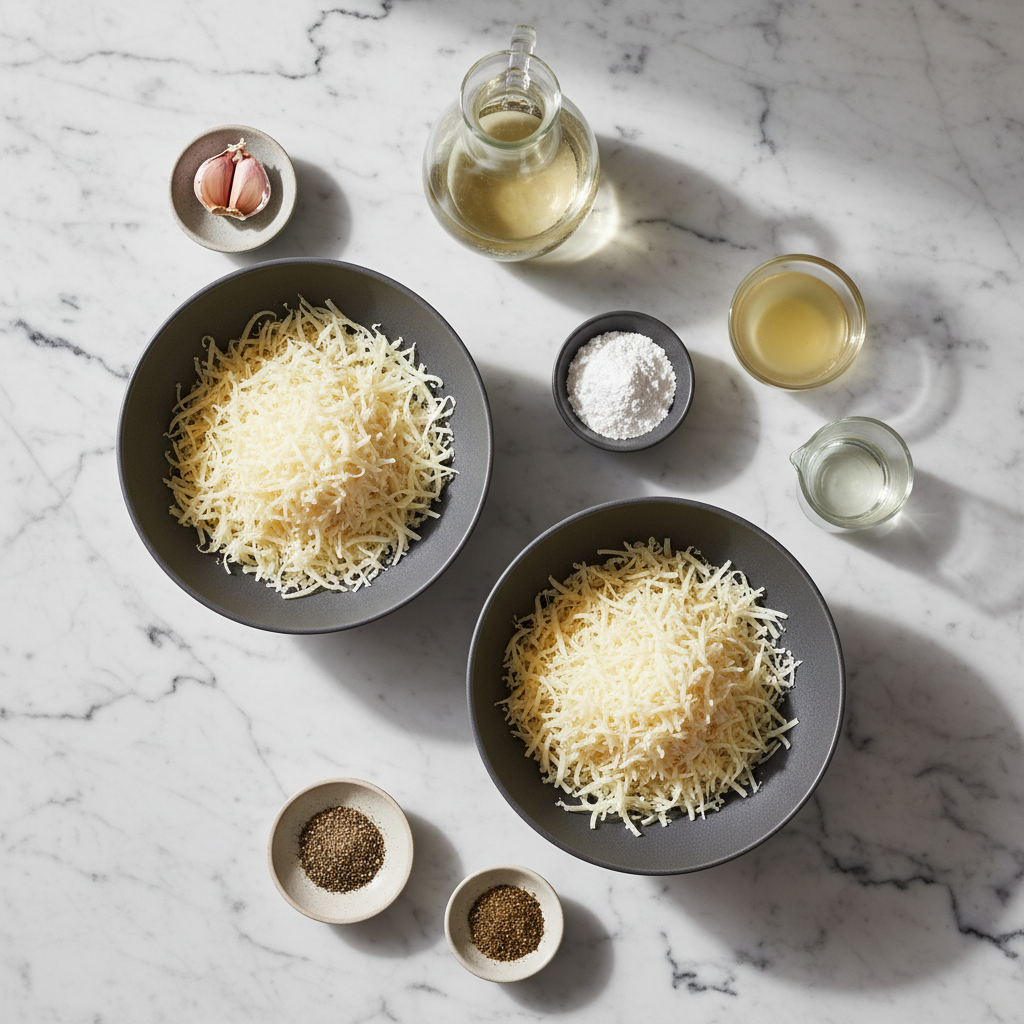
Crafting the perfect Swiss cheese fondue begins with selecting the right foundation. Each ingredient plays a crucial role, from the nutty, complex cheeses to the acidic wine that ensures a smooth, luscious texture.
Ingredients
- 1 garlic clove, halved
- 1 pound Gruyère cheese, grated
- 1/2 pound Emmentaler cheese or other Swiss cheese, grated
- 1 cup dry white wine
- 1 tablespoon plus 1 teaspoon cornstarch
- 1 teaspoon fresh lemon juice
- 1 1/2 tablespoons kirsch
- Freshly ground black pepper
- Freshly grated nutmeg
Ingredient Notes and Substitutions
The Cheese: For the best results, always look for the ‘AOP’ label on your Gruyère, ensuring its authenticity and superior melting qualities. If you can’t find Emmentaler, a high-quality Vacherin Fribourgeois or Appenzeller adds wonderful depth and character to the blend, offering a slightly different but equally delicious experience based on its AOP specifications.
The Wine: Choosing a dry, high-acid white wine, such as a crisp Sauvignon Blanc or a traditional Swiss Fendant, is paramount. The wine’s acidity is not just for flavor; it’s chemically crucial for achieving a stable, smooth emulsion and preventing the cheese from clumping.
Kirsch: This clear cherry brandy is a traditional Swiss addition, imparting a distinct fruitiness and depth. If kirsch is unavailable, a dry brandy can be substituted, or you can omit it entirely for a milder, alcohol-free flavor profile.
How to Make Swiss Cheese Fondue
Preparing the Aromatic Base
- First, take your fondue pot, often called a caquelon, or a sturdy enameled cast-iron casserole, and rub its entire inside surface thoroughly with the halved garlic clove. Instead of discarding it immediately, take a small portion of that garlic clove, finely mince it, and place it directly into the pot.
- Pour the dry white wine into the prepared pot and add a single sprig of fresh thyme. Gently heat this mixture over low heat for about 3 minutes. This crucial ‘blooming’ step extracts the fat-soluble flavor compounds from the garlic and thyme, creating a sophisticated and consistently aromatic base for your fondue. Afterward, carefully remove and discard the thyme sprig.
Melting the Cheeses to Perfection
- In a separate bowl, toss your grated Gruyère and Emmentaler cheeses with the cornstarch to coat them evenly; this helps prevent clumping. Then, add these cheeses along with the fresh lemon juice to the wine in the fondue pot.
- Begin cooking over moderate heat, stirring continuously with a figure-eight motion. Watch as the cheeses slowly transform, beginning to melt and incorporate into the wine, which typically takes about 5 minutes until it forms a cohesive, though not yet entirely smooth, mixture.
Finishing and Serving
- Once the cheese has mostly melted, add the kirsch, along with a generous pinch of freshly ground black pepper and freshly grated nutmeg. Continue to cook, stirring gently but constantly, for another 5 minutes, or until the mixture is perfectly creamy and utterly smooth. Be mindful not to overcook the fondue, as excessive heat will cause the proteins to tighten and become stringy.
- As soon as your fondue reaches its velvety peak, remove it from the direct heat and transfer the pot to your tabletop fondue burner immediately. Maintain a gentle, consistent warmth to keep it flowing beautifully throughout your meal.
Secrets to a Silky Masterpiece
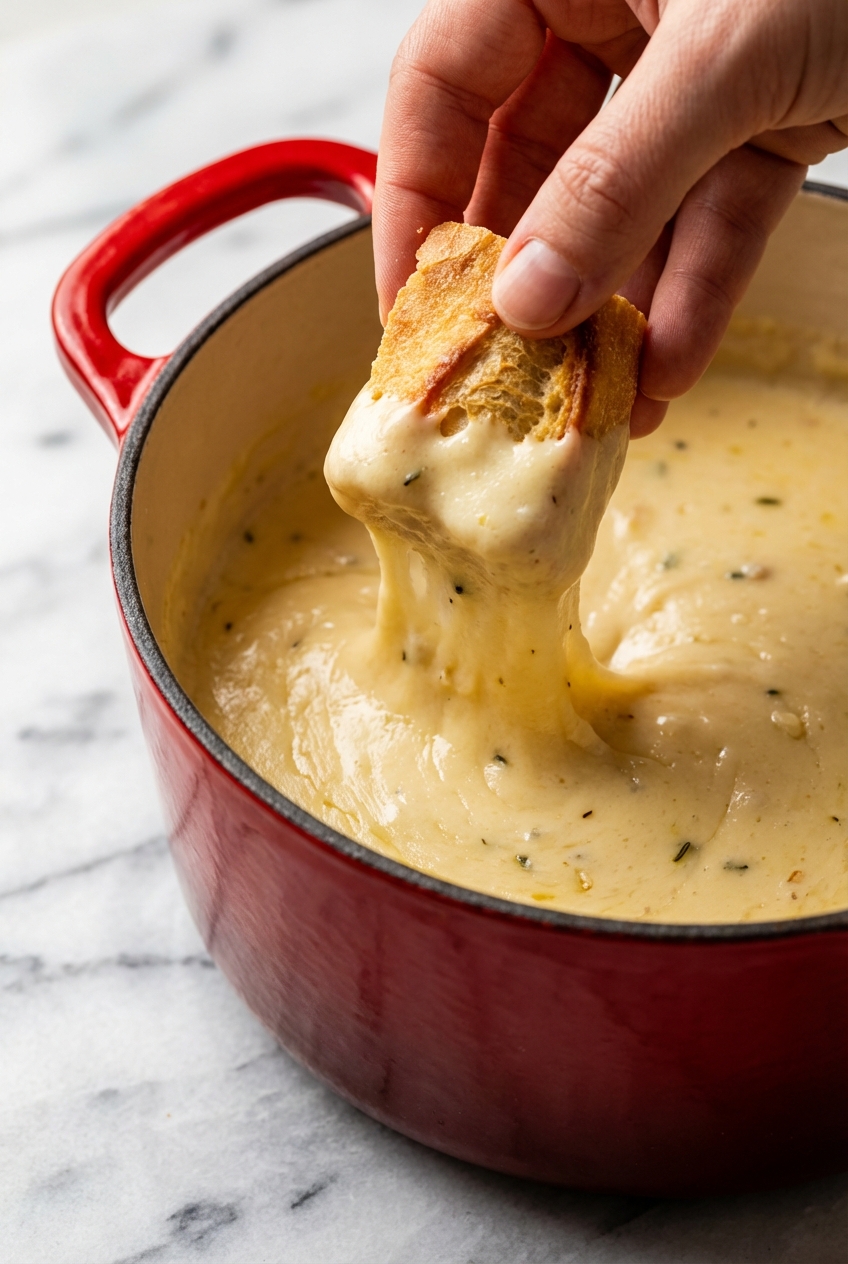
Acidity is Essential: The fresh lemon juice and dry white wine in our recipe are more than just flavor enhancers. Their specific pH levels create an acidic environment that is crucial for preventing the cheese proteins from clumping together, ensuring a stable and incredibly smooth emulsion every time.
Temperature Control: Cheese is surprisingly sensitive to sudden changes in heat. Always make sure your grated cheese is at room temperature before you introduce it to the warm wine. This careful thermal management helps the cheese melt evenly and prevents the fats from releasing too quickly, which can lead to a greasy texture.
Starch Stabilization: Tossing your freshly shredded cheese with cornstarch before it even touches the pot is a professional chef’s trick. The cornstarch creates a subtle protective barrier around each cheese particle, which helps the wine and cheese bind together more effectively and maintain that desirable, silky consistency.
Pro Tips and Troubleshooting
Pro Tips for Success
- Freshly Shredded Only: Please, never use pre-packaged shredded cheese from the grocery store. The cellulose or anti-caking agents used in those products will absolutely ruin the beautiful, silky texture of your fondue, making it gritty.
- Keep Extra Wine Handy: If you notice your fondue thickening too much as your guests enjoy it, simply stir in a splash of warm dry white wine. This quick fix will restore its perfect consistency without compromising flavor.
- Room Temperature Cheese: For the smoothest melt, let your grated cheese come to room temperature for about 30 minutes before adding it to the pot. This prevents thermal shock and helps the cheese integrate seamlessly.
Common Mistakes to Avoid
- Boiling the Mixture: Allowing the fondue to reach a hard boil is the enemy of a smooth texture. High heat will cause the cheese proteins to contract and separate from the wine, resulting in an unappetizingly greasy and broken fondue.
- Rushing the Heat: Patience is a virtue in fondue making. High heat is the fastest way to ruin a batch. Always maintain a gentle, moderate temperature throughout the entire melting process to coax the cheese into submission, rather than forcing it.
Fixing a Broken Fondue
If, despite your best efforts, your fondue separates and looks greasy, don’t panic! Whisk together a teaspoon of cornstarch with a squeeze of fresh lemon juice and a tiny bit of cold wine to create an emergency slurry. Stir this mixture vigorously into your simmering fondue until it miraculously re-emulsifies and returns to its smooth, creamy state. It’s a trick I’ve used more than once in my own kitchen.
Serving and Storage
Traditional and Modern Dippers
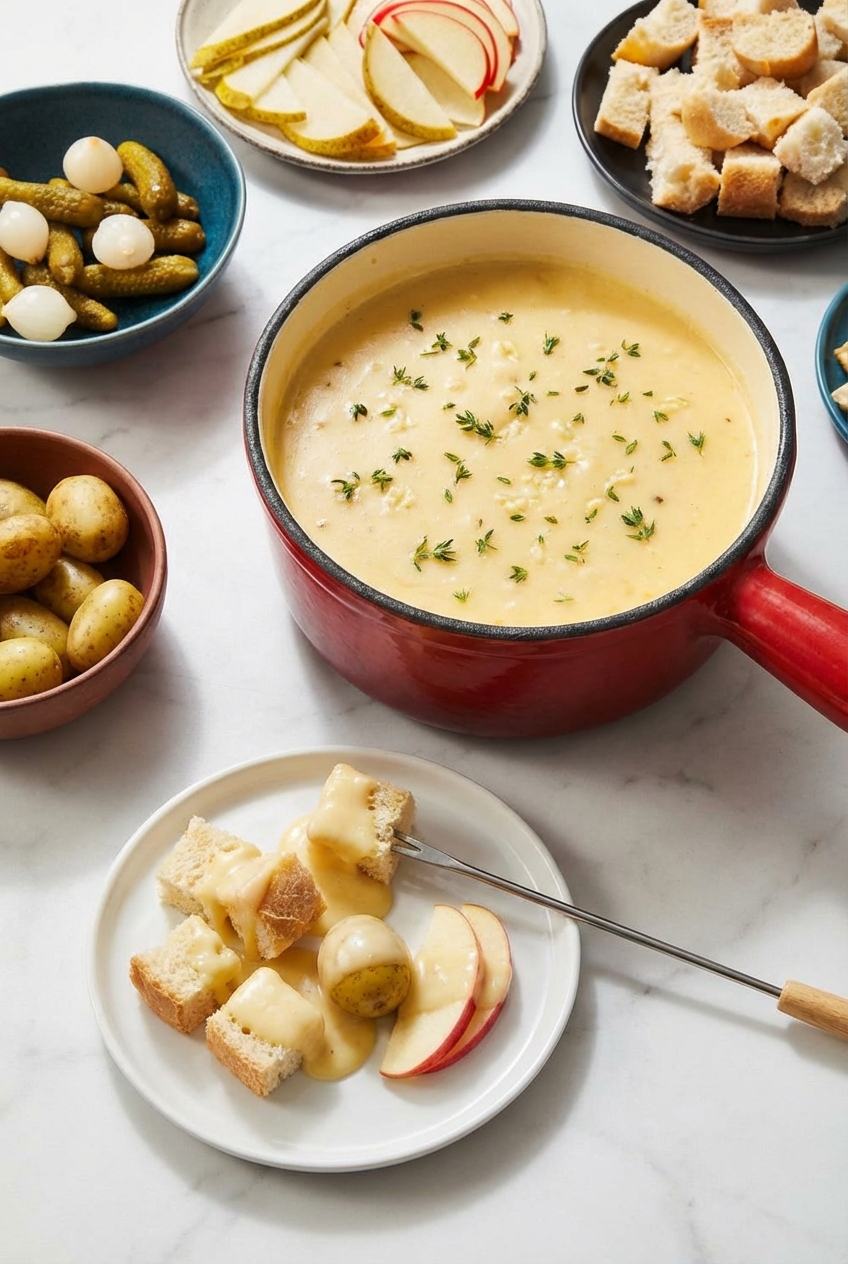
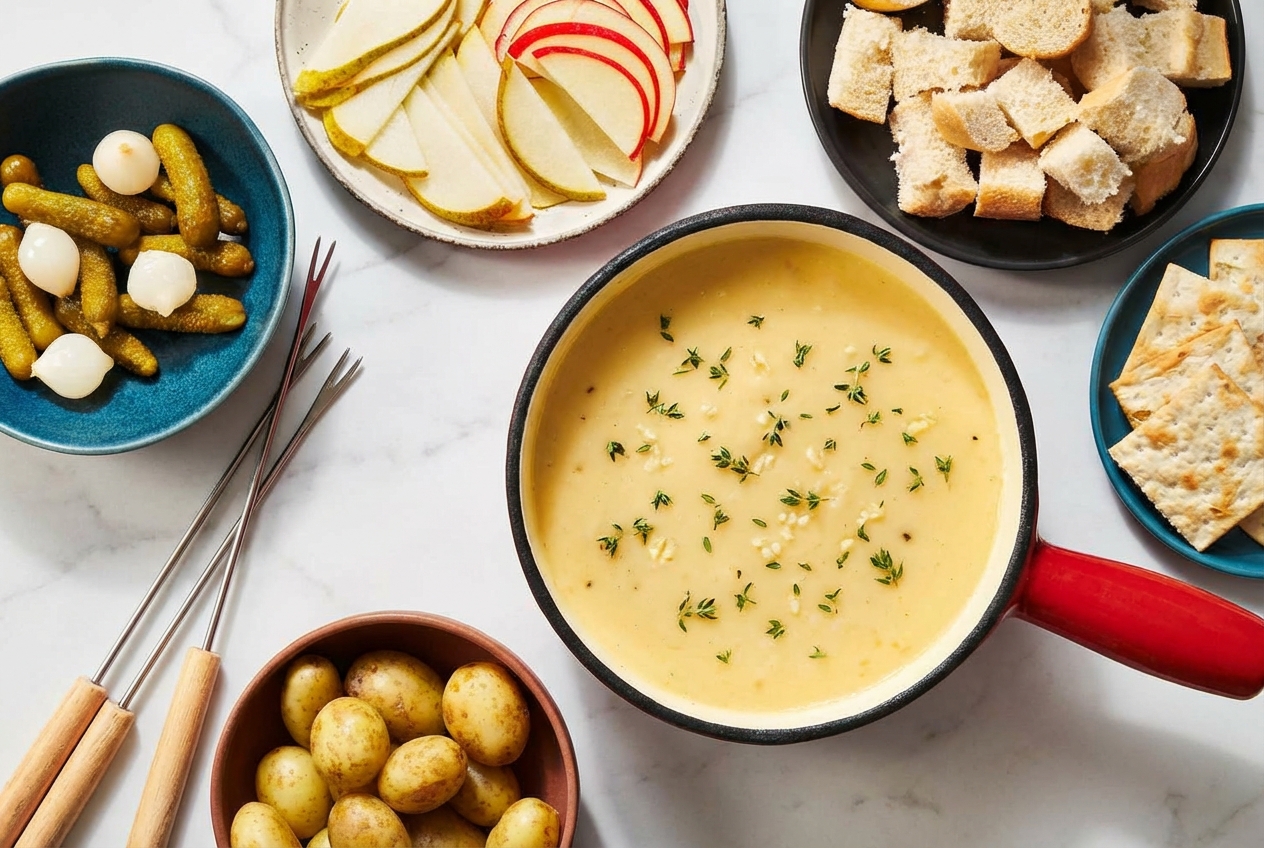
For the quintessential fondue experience, you can’t go wrong with the classics: cubes of day-old crusty baguette, perfectly boiled baby waxy potatoes, and tangy cornichons. These traditional accompaniments offer a wonderful textural contrast to the rich, melted cheese.
For a modern twist, consider sliced Granny Smith apples for a refreshing burst of acidity, lightly blanched broccoli florets, or delicate slices of dried meats like bindenfleisch and prosciutto. If you’re looking for a salty, crunchy alternative to bread, crispy air fryer fries are surprisingly delightful.
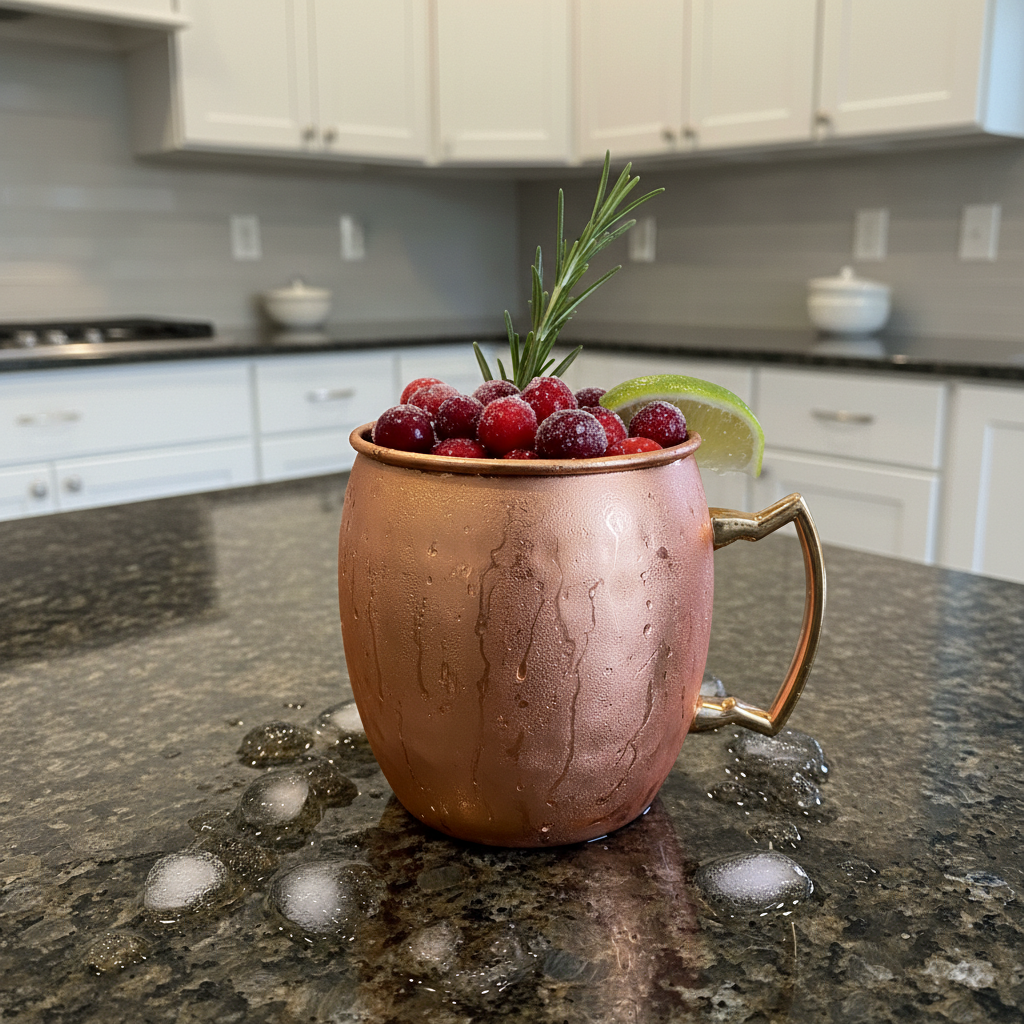
When it comes to beverages, serve the same dry white wine you used in the pot, or opt for hot black tea. The Swiss traditionally believe tea aids in digesting the rich melted cheese, creating a harmonious balance. For a festive gathering, a refreshing Christmas mule can also be a delightful pairing.
Storage and Reheating
Should you find yourself with any delicious leftovers, store the cooled fondue in an airtight container in the fridge for up to 3 days. It’s rare, but it happens!
To reheat, do so slowly over very low heat on the stovetop, adding a splash of wine and whisking constantly. This gentle approach prevents the cheese from becoming oily or gritty, preserving its creamy texture for another indulgent moment.
And don’t forget the ‘Religieuse’! This is the delicious, toasted cheese crust that forms at the bottom of the pot, a prized culinary treasure in Swiss culture. It’s considered the best part of the meal, a crispy, savory reward to be scraped and shared among friends, as celebrated in many fondue traditions.

Authentic Swiss Cheese Fondue
Ingredients
Equipment
Method
- Rub the entire inside surface of your fondue pot or caquelon with the halved garlic clove. Finely mince a small portion of the used garlic and place it directly into the pot.
- Pour the dry white wine into the pot and add a fresh sprig of thyme. Heat the mixture over low heat for 3 minutes to bloom the aromatics, then remove and discard the thyme sprig.
- In a separate bowl, toss the grated Gruyère and Emmentaler cheeses with cornstarch until evenly coated. Add the cheese mixture and fresh lemon juice to the warm wine in the pot.
- Cook over moderate heat while stirring continuously in a figure-eight motion. Continue for approximately 5 minutes until the cheese is incorporated into the wine and forms a cohesive mixture.
- Stir in the kirsch, black pepper, and nutmeg. Continue cooking and stirring for another 5 minutes until the fondue is perfectly creamy and smooth. Avoid overcooking to prevent the proteins from tightening.
- Remove the pot from the stove and transfer it immediately to a tabletop fondue burner. Maintain a gentle heat to keep the cheese flowing throughout the meal.
Notes
Frequently Asked Questions
How do I fix a separated or greasy fondue?
What is the difference between Gruyère and Emmentaler in a fondue?
Can I make fondue ahead of time and reheat it?
Why is my fondue not smooth even though I used cornstarch?
What are the best non-bread dippers for a low-carb fondue?
Conclusion
Mastering Swiss cheese fondue is a truly rewarding journey into the heart of European comfort food. By embracing my cold-infusion technique and respecting the simple science of the melt, you can provide an unforgettable dining experience for your loved ones. Gather your friends, prepare your delicious dippers, and savor the velvety richness of a perfectly executed fondue.
Printable Recipe Card
Want just the essential recipe details without scrolling through the article? Get our printable recipe card with just the ingredients and instructions.