Skip to content
There is nothing quite like a truly comforting bowl of stew, especially one that warms you from the inside out on a chilly evening. As a chef, I am thrilled to share my ultimate recipe for Irish Vegetarian Stew, a dish so rich and satisfying it will rival any traditional meat-based version you have tried. Whether you are looking for a delicious plant-based meal or comprehensive tips to master your stew, this recipe delivers a robust, deeply flavorful, and incredibly comforting experience perfect for any occasion.
Why You’ll Love This Recipe
This Irish Vegetarian Stew goes beyond typical plant-based versions with a unique culinary twist that sets it apart. I incorporate a touch of liquid smoke and nutritional yeast to build an unparalleled depth of flavor. Liquid smoke imparts a subtle, savory, and almost meaty depth, beautifully mimicking the traditional Irish stew flavors often derived from lamb or beef. This enhances the umami profile without any animal products. Nutritional yeast further enriches the stew’s complexity and body, adding a cheesy, nutty, and distinctly umami flavor. These strategic additions create a more robust and deeply satisfying broth. This is especially beneficial if you adjust or omit the stout beer for bitterness concerns, ensuring a perfectly balanced and comforting taste. This deeply comforting plant-based meal is also freezer friendly, making it ideal for easy meal prep. It provides a truly hearty and filling experience for the whole family.
Ingredients Needed
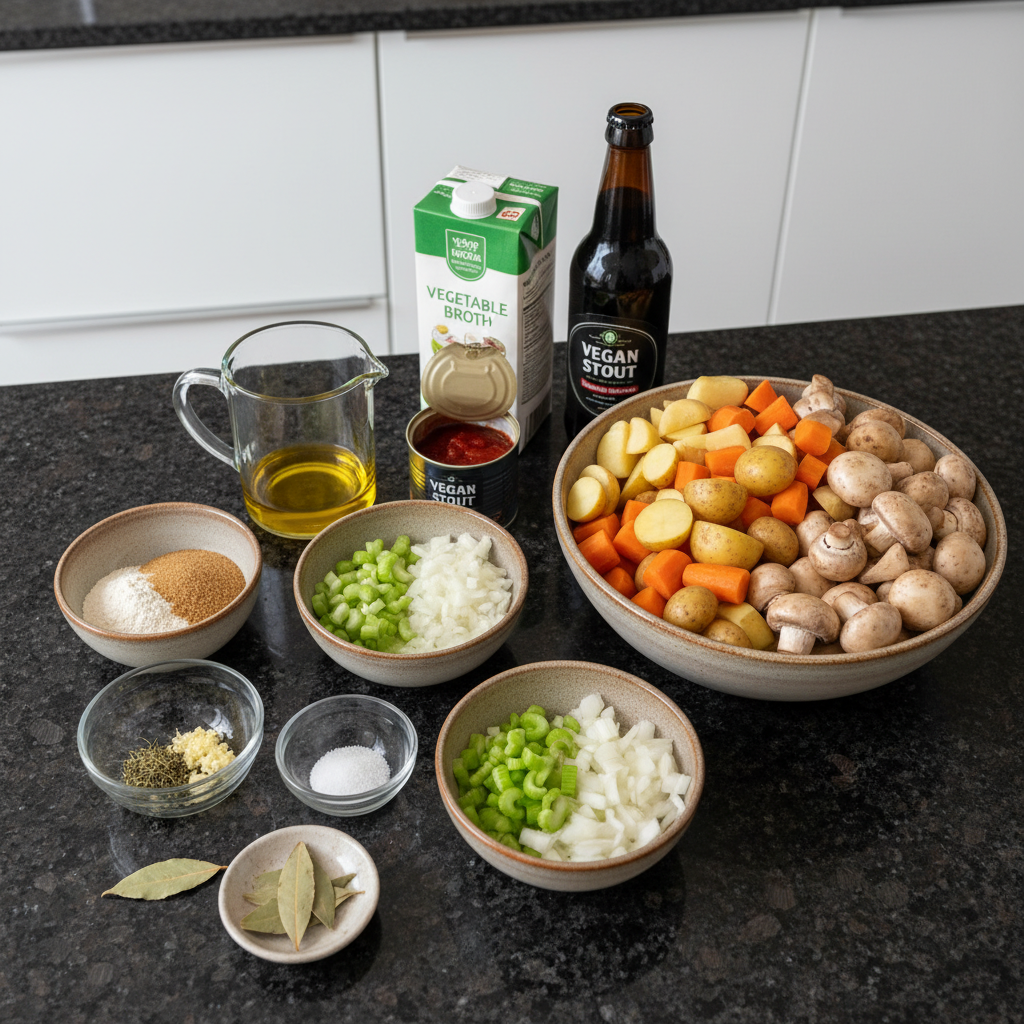
Here are the ingredients you will need to create this incredibly flavorful Irish Vegetarian Stew:
- 2 tablespoons olive oil
- 2 ribs celery (chopped)
- 1 yellow onion (chopped)
- 4 cloves garlic (minced)
- 1/4 cup all-purpose flour
- 2 – 4 cups vegetable broth
- 1 can (473ml) vegan stout beer
- 3 carrots (peeled and cut into chunks)
- 2 parsnips (peeled and cut into chunks (optional))
- 8 oz mushrooms (quartered)
- 2 1/2 cups baby potatoes (halved (or about 2 regular potatoes and cut into chunks))
- 1/2 cup tomato paste
- 2 bay leaves
- 2 teaspoons brown sugar
- 1 teaspoon dried thyme leaves
- 3/4 teaspoon salt
- 1/2 teaspoon ground pepper
Ingredient Notes & Substitutions
Vegan Stout Beer: This ingredient plays a crucial role in developing a profound flavor depth and umami in the stew. While traditional Guinness stout is not vegan friendly due to its fining process, many craft stouts are, and specific vegan versions exist. In the US, look for brands like Samuel Smith’s Organic Chocolate Stout or many stouts from smaller craft breweries that label their products as vegan friendly. If you prefer not to use beer, a good quality vegan beefless broth or even homemade mushroom stock can be an excellent substitute to maintain that savory richness.
Flour: All-purpose flour acts as a vital thickening agent, creating a hearty and substantial stew. For a gluten-free option, you can easily substitute gluten-free all-purpose flour. Alternatively, for those seeking other thickener alternatives, a small amount of ground chia seeds or a cornstarch slurry can also work effectively.
Vegetable Broth: The quality of your vegetable broth significantly impacts the overall flavor of your Irish Vegetarian Stew. I always recommend using a high-quality broth. For an even richer taste, homemade mushroom stock makes a fantastic alternative, contributing an extra layer of umami.
Sweetener: The brown sugar in this recipe helps to balance the savory and slightly bitter notes. If you prefer, maple syrup or agave can be used as a one-to-one substitute, providing a similar balancing sweetness.
Optional Plant-Based Proteins: To boost the protein content and make the stew even more filling, consider adding plant-based proteins. Cubed tofu, seitan, or even canned white beans (like cannellini or navy beans) can be wonderful additions.
How to Make Irish Vegetarian Stew
Before we begin, a quick note on bitterness: some people find this recipe to have a bitter edge, which I personally love. If bitter flavors are not to your taste, you have a few options. Try using less tomato paste to start, adding more later to taste if desired. Crucially, choose a beer you genuinely enjoy the flavor of. If you do not like it before it goes in the soup, you will not like it in the soup. You can also start with less beer, or replace it entirely with a vegan beefless broth. If you find the finished stew too bitter, try balancing it with 1 to 2 tablespoons of olive oil or vegan butter for fat, and 1 to 2 tablespoons of brown or white sugar, agave, or maple syrup for sweetness.
Building the Flavor Base
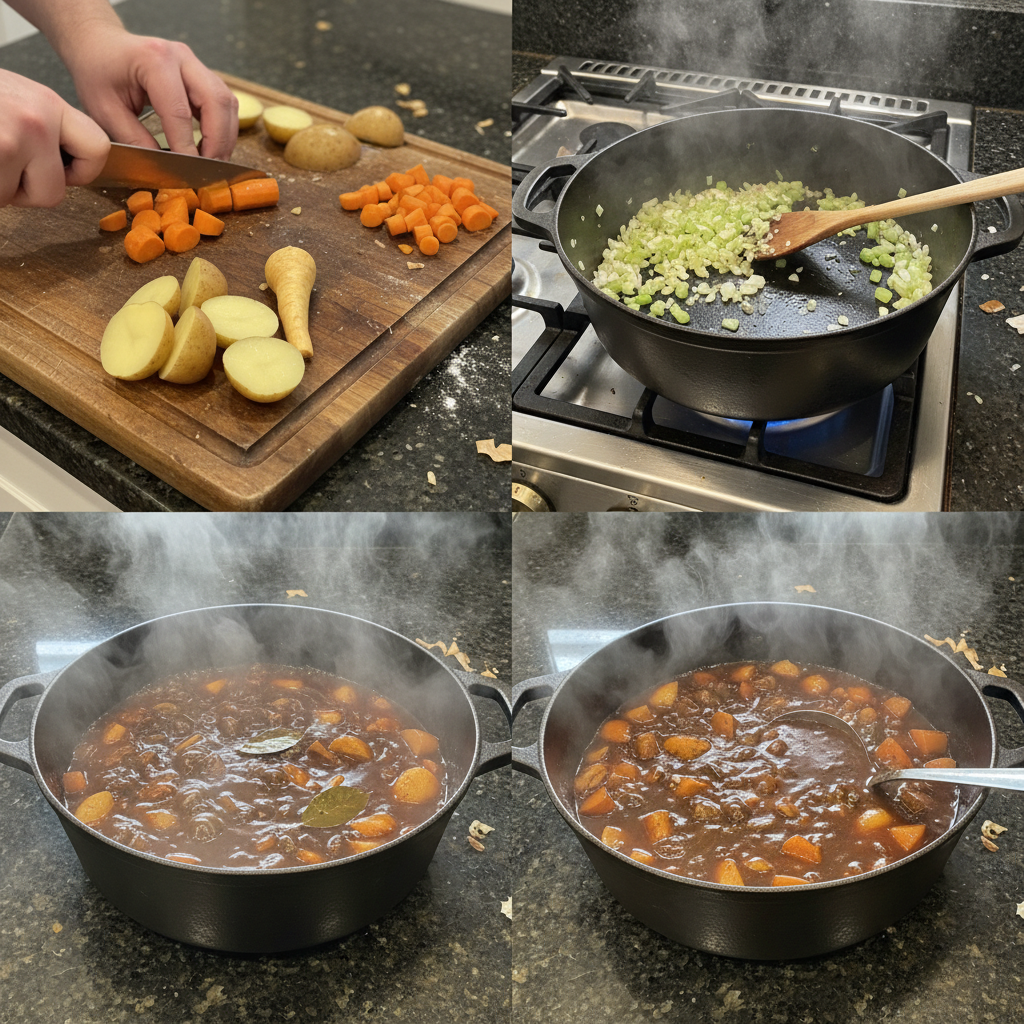
Heat a large pot over medium-high heat on your stove. Add the olive oil. Once the oil is shimmering and hot, add the chopped celery, onion, and minced garlic to the pot. Sauté these aromatics for about 5 minutes, stirring occasionally, until the onion becomes translucent and just begins to show a lovely light brown color. This browning encourages the Maillard reaction, which is key for developing a deeper, more complex flavor in our stew.
Thickening and Simmering
Next, sprinkle the all-purpose flour over the sautéed vegetables. Stir well to ensure the veggies are thoroughly coated, and cook for another minute. This step heats up the flour, which helps thicken our stew and cooks out any raw flour taste. Pour in 2 cups of vegetable broth, making sure to scrape the bottom of the pan with your spoon. This deglazes the pot, lifting any flavorful browned bits from the bottom and incorporating them into the broth. Now, add the vegan stout beer, all of the remaining prepped vegetables, tomato paste, bay leaves, brown sugar, dried thyme leaves, salt, and ground pepper. Remember to also add the 1/2 teaspoon of liquid smoke and 1 tablespoon of nutritional yeast at this stage, mixing them in thoroughly with the broth and spices for maximal flavor integration. The beer will foam up significantly, but do not worry. This is normal, and the bubbles and alcohol will cook right out as the stew simmers.
Cooking to Perfection
Bring the stew to a gentle simmer. Reduce the heat to medium-low, cover, and cook for 10 to 15 minutes. Continue simmering until all the vegetables are fork-tender, but be careful not to let them become mushy. As it cooks, you will notice the stew becomes very thick, rich, and fragrant. If you prefer a thinner consistency, feel free to add 1 to 2 more cups of vegetable broth, thinning it out to your taste. Before serving, remember to remove the bay leaves. Enjoy your hearty Irish Vegetarian Stew hot. Any cooled leftovers can be stored, covered, in the fridge for up to 5 days.
Mastering Vegetable Prep & Even Cooking
Achieving the perfect texture in your Irish Vegetarian Stew relies heavily on how you prepare your vegetables. Uniform cutting is essential for consistent doneness. It ensures that every bite is satisfying and prevents some vegetables from becoming mushy while others remain firm. This is a fundamental principle of food chemistry for stews.
Why Even Cuts Matter: Vegetables of similar size and shape will cook at a similar rate. This prevents the frustrating situation where some pieces are overcooked and falling apart, while others are still stubbornly firm. Aim for consistency across all your root vegetables.
Root Vegetables (Carrots, Parsnips, Potatoes): For this stew, I advise cutting carrots, parsnips, and potatoes into roughly 1-inch (2.5 cm) chunks. This size is ideal for the specified cooking time, allowing them to become perfectly fork-tender. For a foolproof method to ensure even cooking, especially with very hearty root vegetables, you can pre-boil them until they are almost fork-tender before adding them to the stew base. This prevents undercooking hearty root vegetables and guarantees a soft texture within the simmering time.
Mushrooms: Quartering the mushrooms is key. This size allows them to absorb the rich flavors of the stew while retaining a satisfyingly meaty texture, rather than becoming watery or dissolving into the broth.
Optional Additions: If you decide to add other vegetables like chopped cabbage, petite peas, or white beans, consider their cooking times. Cabbage can be added with the main vegetables, but peas should be stirred in closer to the end of the simmering process, just enough to heat through, to prevent them from becoming overcooked and mushy. White beans, if using canned, should be rinsed and added towards the end as well since they are already cooked.
Pro Tips & Troubleshooting
Crafting the perfect Irish Vegetarian Stew is a rewarding experience. Here are some pro tips and common mistakes to avoid to ensure your stew turns out spectacular every time.
Pro Tips
Enhancing Umami: The unique twist of liquid smoke and nutritional yeast is designed to contribute a deep, savory umami flavor, mimicking the complexity of traditional stews. If after tasting you desire an even richer profile, feel free to add another dash of liquid smoke or a sprinkle more nutritional yeast. Trust your palate!
Bitterness Control: To manage potential bitterness, always start with less tomato paste and add more to taste. Choose a vegan stout beer whose flavor you genuinely enjoy on its own. If your finished stew still leans too bitter, balance it out with a tablespoon or two of olive oil or vegan butter, and a touch of sweetness from brown sugar, agave, or maple syrup.
Adding Plant-Based Proteins: If you are incorporating optional plant-based proteins like tofu or seitan, I recommend sautéing them separately first until golden brown. This develops their flavor and texture. Add them to the stew towards the end of the cooking process to prevent them from becoming overcooked or rubbery.
Perfecting Thickness: This recipe yields a delightfully thick and hearty stew. If you prefer a thinner consistency, simply thin it out to taste with 1 to 2 more cups of vegetable broth. If your stew happens to be too thin, you can create a slurry with a bit more all-purpose flour or ground chia seeds mixed with a splash of cold broth, then stir it into the simmering stew to thicken it to your desired consistency.
Common Mistakes to Avoid
Ignoring Bitterness Potential: A common pitfall is not considering the bitterness potential from certain ingredients. Always taste your stout beer beforehand and be mindful of the amount of tomato paste you add initially. Overdoing it can lead to an overly bitter stew.
Uneven Vegetable Cooking: Not cutting your vegetables uniformly is a frequent mistake. This results in unevenly cooked vegetables – some mushy, some still firm. Take the time to chop all your carrots, parsnips, and potatoes into similar-sized chunks. For harder root vegetables, consider pre-boiling them briefly to ensure they become fork-tender at the same time as softer ingredients.
Blandness: A bland stew often stems from insufficient seasoning or not allowing enough simmering time for the flavors to fully meld. Always taste and adjust your seasoning (salt, ground pepper, dried thyme leaves) throughout the cooking process. A good stew needs time for all those lovely flavors to truly develop and deepen.
Overcooking: While simmering develops flavor, overcooking can turn your beautifully fork-tender vegetables into a mushy disappointment. Once your vegetables reach that perfect tender stage, remove the stew from the heat or reduce the simmer to its absolute lowest setting.
Serving & Storage
This Irish Vegetarian Stew is a meal in itself, but a few thoughtful accompaniments can elevate the experience even further.
Serving Ideas
Classic Accompaniments: Serve your hearty Irish Vegetarian Stew piping hot with a generous slice of crusty bread, traditional Irish soda bread, a sourdough baguette, or warm dinner rolls. These are perfect for soaking up every drop of the rich, savory gravy.
Creative Garnishes: Beyond simple fresh herbs, consider adding a dollop of vegan sour cream for a creamy contrast. A fresh crack of black pepper or a sprinkle of chopped chives or fresh parsley also adds a lovely finishing touch and brightens the flavors.
Pairing Suggestions: For non-alcoholic pairings, a robust black tea, a glass of sparkling water with lemon, or a non-alcoholic dark beer can beautifully complement the deep flavors of the stew.
Storage and Make-Ahead
Refrigeration: Leftover Irish Vegetarian Stew, once cooled completely, should be transferred to an airtight container and stored in the fridge for up to 5 days. It often tastes even better the next day as the flavors continue to meld.
Freezing: This stew freezes beautifully, making it an excellent candidate for meal prep. Allow the stew to cool completely before transferring it to airtight freezer-safe containers or heavy-duty freezer bags. It can be frozen for up to 3 months. You will find that the vegetables maintain much of their texture, with minimal changes.
Reheating: For best reheating practices, gently reheat the stew on the stovetop over medium-low heat, stirring occasionally. If the stew has thickened too much in the fridge or freezer, add a splash of vegetable broth or water to loosen it to your desired consistency. Avoid reheating at high heat, which can scorch the bottom or make the vegetables mushy.
Transforming Leftovers: Do not let any leftover Irish Vegetarian Stew go to waste. Transform it into new, exciting meals. Use it as a hearty filling for a stew pie, topped with a puff pastry crust. Spoon it over creamy mashed potatoes for a vegetarian shepherd’s pie. You can even use it as a flavorful filling for savory hand pies or pasties for a portable meal.
Conclusion
My ultimate Irish Vegetarian Stew is truly a labor of love, designed to deliver unparalleled depth of flavor and comfort. The unique twist of liquid smoke and nutritional yeast ensures a robust, umami-rich experience that stands proudly alongside any traditional stew. This plant-based recipe is not only easy to master in your own kitchen but guarantees a satisfying, comforting food experience every time. I encourage you to try this recipe, experiment with the variations I have suggested, and most importantly, enjoy sharing this delightful meal with your loved ones. Save this recipe, share your creations, and explore other delicious vegan comfort food recipes.
FAQ
Is Guinness stout vegan friendly?
Traditional Guinness stout is generally not considered vegan friendly due to its use of isinglass (a fish bladder product) in the filtering process. However, many modern craft stouts and specific vegan-labeled stouts are available and suitable for a plant-based diet. Always check the label or the brewery’s website to confirm.
How can I make this Irish vegetarian stew less bitter?
To reduce bitterness, you can start with less tomato paste and add it gradually to taste. Ensure you use a vegan stout beer whose flavor you personally enjoy. If the stew is still too bitter at the end, balance it out by adding 1 to 2 tablespoons of olive oil or vegan butter for richness, and 1 to 2 tablespoons of brown sugar, agave, or maple syrup for sweetness.
Can I add plant-based proteins like tofu or seitan to this stew?
Yes, absolutely! Cubed tofu, seitan, or even white beans make excellent additions for a protein boost. For best results with tofu or seitan, sauté them separately until golden brown for better flavor and texture, then add them to the stew towards the end of the simmering process to prevent overcooking.
What are some good side dishes to serve with Irish vegetarian stew?
This hearty stew pairs wonderfully with crusty bread, traditional Irish soda bread, or warm dinner rolls for dipping. For a creamy element, consider a dollop of vegan sour cream on top. A simple green salad also offers a nice contrast.
Can I make this stew in a slow cooker or Instant Pot?
Yes, this stew can be adapted for a slow cooker or Instant Pot. For a slow cooker, sauté the aromatics and flour on the stovetop first, then combine all ingredients in the slow cooker and cook on low for 6-8 hours or high for 3-4 hours, until vegetables are tender. For an Instant Pot or pressure cooker, sauté using the Sauté function, then add all ingredients, seal, and cook on high pressure for 10-12 minutes, followed by a natural release.
How long do the vegetables need to cook to be tender?
The vegetables in this stew typically need to simmer for 10-15 minutes to become fork-tender. However, this can vary based on the size of your vegetable chunks and your stovetop’s heat. You can ensure even cooking by cutting vegetables uniformly, or by pre-boiling harder root vegetables briefly before adding them to the stew.
What if I do not like the taste of beer in my stew?
If you are not a fan of beer, you can replace the vegan stout beer entirely with an equal amount of good quality vegan beefless broth or even homemade mushroom stock. This will still contribute a rich, savory depth to your stew without the beer flavor.
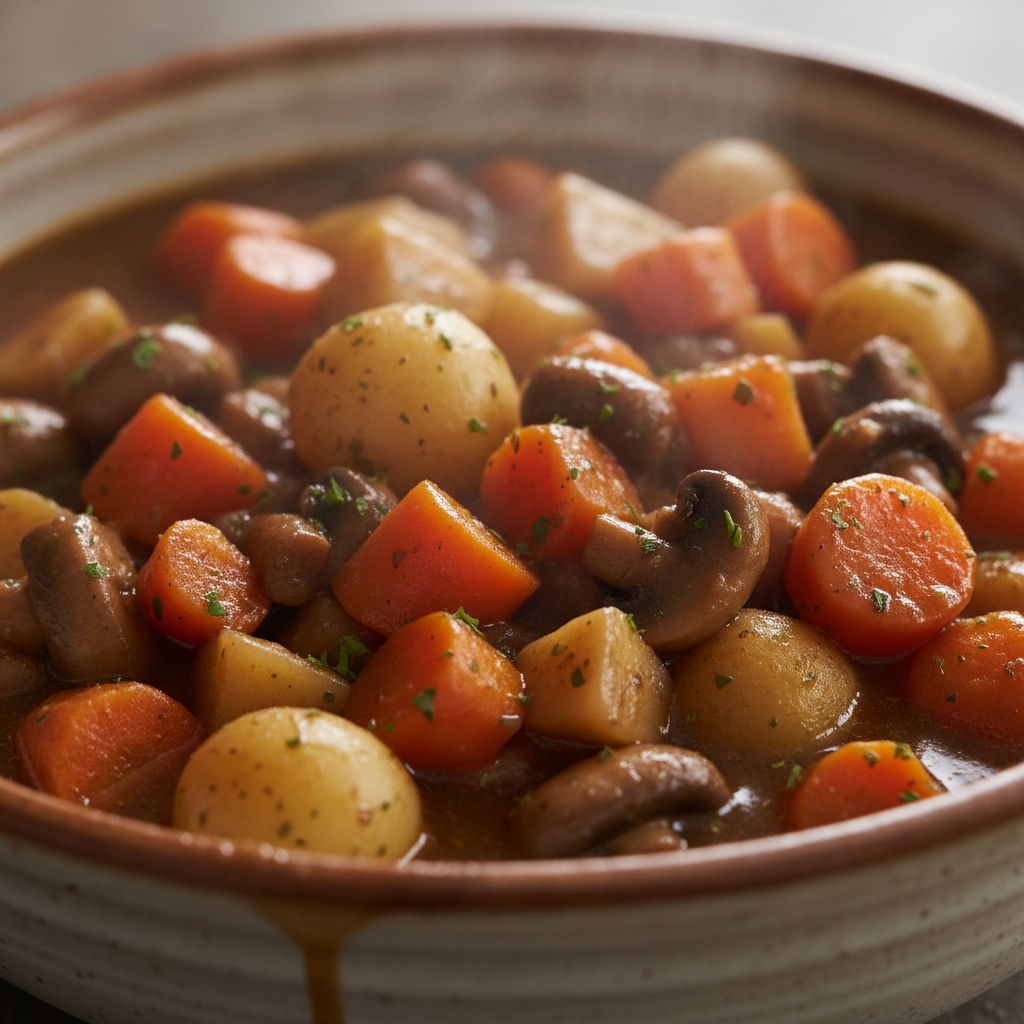
Hearty Irish Vegetarian Stew: The Ultimate Umami-Rich Recipe
Ingredients
Equipment
Method
- Heat a large pot over medium-high heat on your stove. Add the olive oil.
- Once the oil is shimmering and hot, add the chopped celery, onion, and minced garlic to the pot.
- Sauté these aromatics for about 5 minutes, stirring occasionally, until the onion becomes translucent and just begins to show a lovely light brown color.
- Sprinkle the all-purpose flour over the sautéed vegetables. Stir well to ensure the veggies are thoroughly coated, and cook for another minute.
- Pour in 2 cups of vegetable broth, making sure to scrape the bottom of the pan with your spoon to deglaze.
- Now, add the vegan stout beer, all of the remaining prepped vegetables, tomato paste, bay leaves, brown sugar, dried thyme leaves, salt, ground pepper, 1/2 teaspoon of liquid smoke, and 1 tablespoon of nutritional yeast, mixing them in thoroughly.
- Bring the stew to a gentle simmer. Reduce the heat to medium-low, cover, and cook for 10 to 15 minutes, until all the vegetables are fork-tender.
- If you prefer a thinner consistency, feel free to add 1 to 2 more cups of vegetable broth.
- Before serving, remember to remove the bay leaves. Enjoy your hearty Irish Vegetarian Stew hot.
Notes
Printable Recipe Card
Want just the essential recipe details without scrolling through the article? Get our printable recipe card with just the ingredients and instructions.