Skip to content
Step into my kitchen and prepare to be enchanted by the irresistible aromas of this creamy blackened chicken pasta. This dish brings together tender, perfectly seasoned chicken with a luxurious, rich sauce, creating an unforgettable meal that is surprisingly easy to make. It is an ideal weeknight dinner solution for US home cooks seeking comfort, flavor, and a touch of culinary flair.
I promise you, this recipe will quickly become a cherished favorite, offering a delicious, creamy, smoky, and spicy experience that satisfies every craving.
Why You’ll Love This Creamy Blackened Chicken Pasta Recipe
A Luxurious Creaminess: Our special touch in this blackened chicken pasta recipe is the addition of ¼ cup of heavy cream or cream cheese to the sauce.
Enhanced Mouthfeel and Flavor: This ingredient transforms the sauce, making it incredibly richer, silkier, and creamier than traditional versions. The fat helps to emulsify the sauce, binding the smoky, spicy flavors of the blackened seasoning and the tangy tomatoes into a harmonious, luxurious finish that American diners expect from a pasta dish.
Quick & Easy Weeknight Delight: This dish comes together quickly, making it a perfect solution for busy weeknights when you crave something satisfying and homemade.
Bursting with Flavor: You will savor the spicy, smoky, and tender chicken combined with a rich, flavorful, and perfectly cheesy sauce.
Perfectly Balanced: The cream addition brilliantly mellows the heat from the blackened seasoning and the acidity of the tomatoes, ensuring every forkful is a perfectly balanced experience.
Ingredients Needed for Creamy Blackened Chicken Pasta
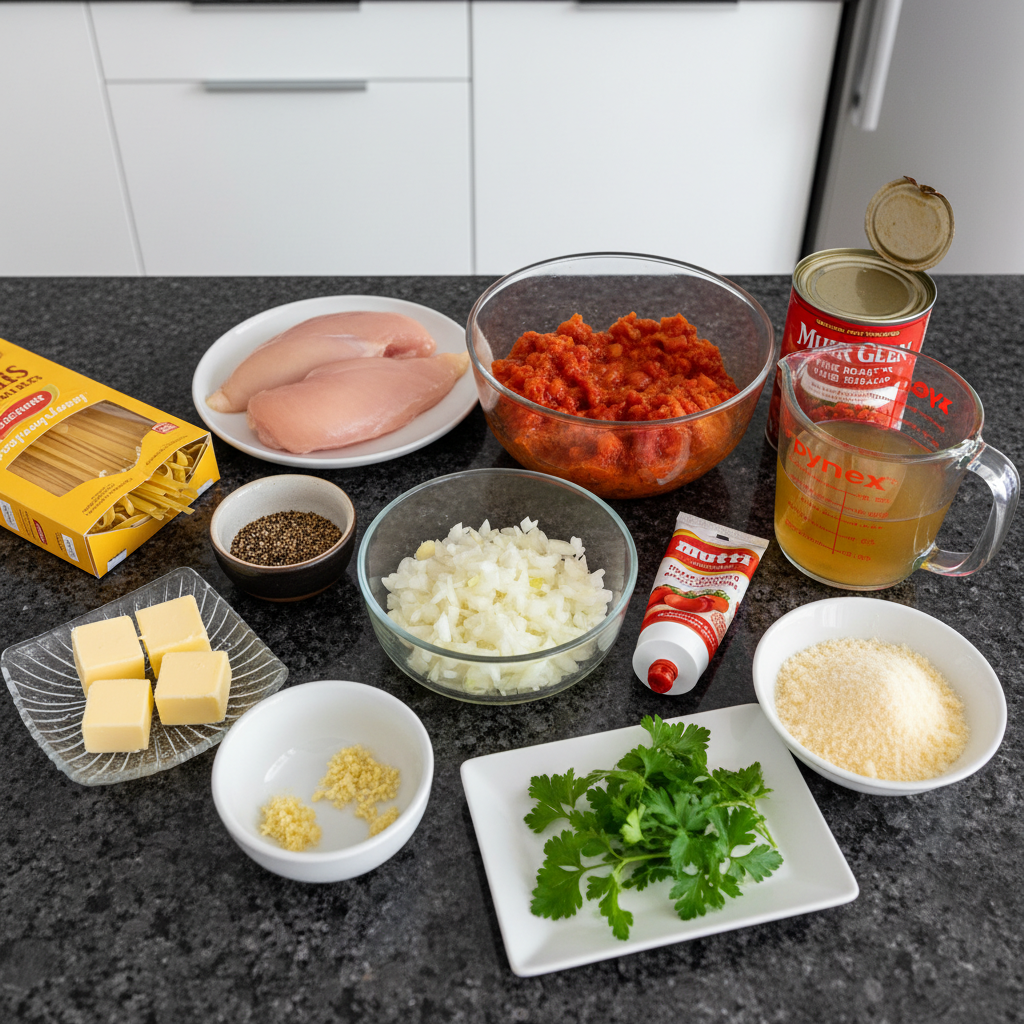
- 12 ounces fettuccine pasta, or your favorite
- 2 chicken breasts, butterflied into 4 pieces
- 2 teaspoons blackened seasoning
- 1 tablespoon butter
- 1 tablespoon butter
- 1 small onion, chopped
- 2 garlic cloves, chopped
- 15 ounce can fire-roasted diced tomatoes, drained*
- 1 cup chicken broth or stock
- 2 tablespoons tomato paste
- ¼ cup heavy cream or cream cheese
- ¼ cup parmesan cheese, more for serving
- Parsley, for serving
Ingredient Notes & Smart Substitutions
Pasta: While fettuccine pasta is classic, feel free to use penne pasta, spaghetti, or even gluten-free pasta for dietary needs. Choose a shape that holds creamy sauces well.
Chicken: If you prefer, chicken thighs (1-1.5 lbs) can be used instead of chicken breasts. Ensure they are cooked to an internal temperature of 175F.
Blackened Seasoning: This key blend typically includes paprika, cayenne pepper, garlic powder, onion powder, dried thyme, and dried oregano. It gives the chicken its signature smoky and spicy kick. Always check labels for quality and specific ingredients.
Tomatoes: If fire-roasted diced tomatoes are unavailable, regular diced tomatoes or Italian-seasoned diced tomatoes work perfectly fine.
Dairy-Free Option: To make this dish dairy-free, use olive oil instead of butter, omit the parmesan cheese, and skip the heavy cream or cream cheese. You can try an unsweetened plant-based cream alternative for a similar richness if desired.
Parmesan Cheese: For the best flavor and melting consistency, I always recommend freshly grated parmesan cheese.
How to Make Creamy Blackened Chicken Pasta
1. Cook the Pasta
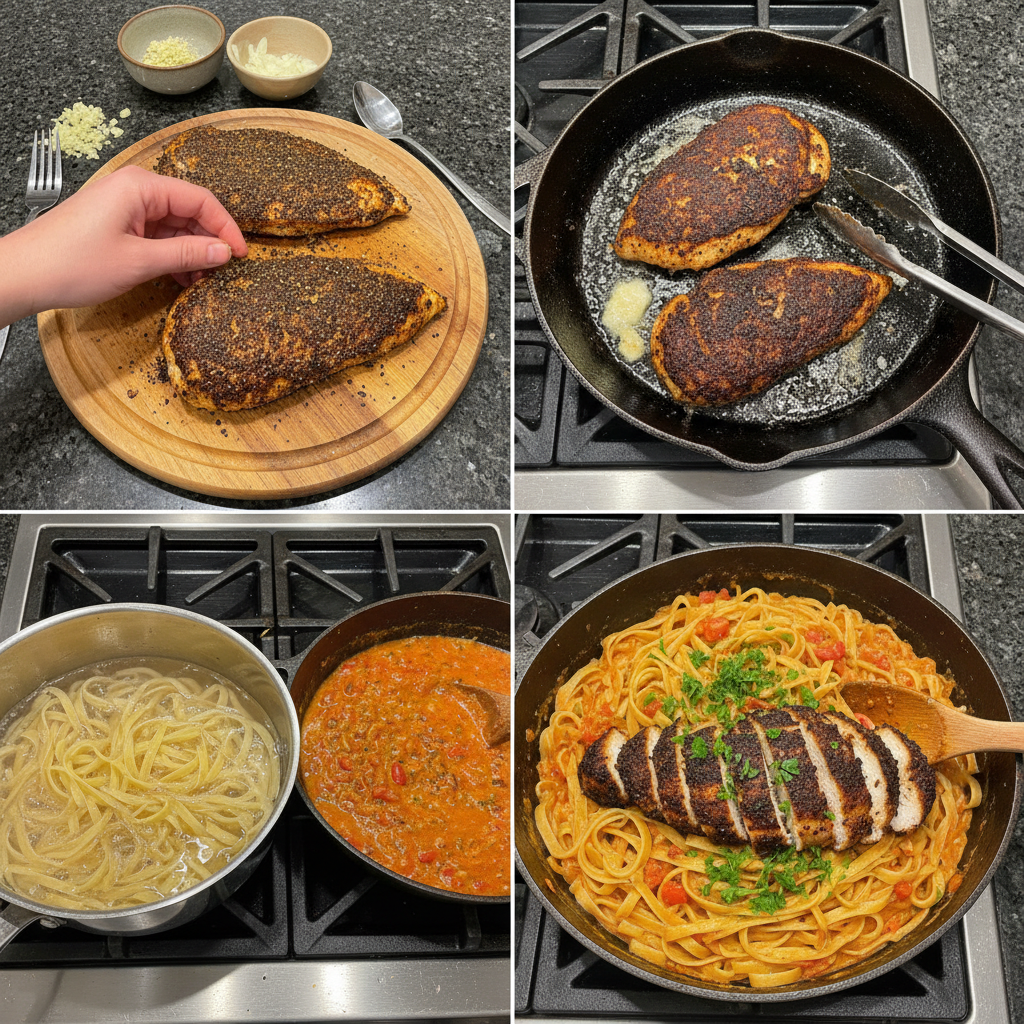
Bring a large pot of water to a rolling boil. Add your fettuccine pasta, or your chosen shape, and cook according to package directions until it is perfectly al dente. Before draining, make sure to reserve 1 cup of the starchy pasta water. Then, drain the pasta and set it aside.
2. Prepare the Chicken
On a clean, flat surface, pat the chicken breasts thoroughly dry with paper towels. To butterfly them, place a chicken breast flat on a cutting board. Hold it firmly with one hand and, using a sharp chef’s knife, carefully slice horizontally through the thickest part of the breast. Stop just before cutting all the way through so it opens up like a book. This creates thinner, more even pieces for quick and uniform cooking.
3. Season the Chicken
Generously season both sides of the butterflied chicken breasts with the blackened seasoning. Ensure full coverage for maximum smoky and spicy flavor.
4. Sear the Chicken
Heat a skillet, preferably cast iron for the best sear, over medium-high heat until it is very hot. Melt 1 tablespoon of butter in the pan. Carefully place the seasoned chicken breasts in the hot pan, making sure not to overcrowd it. Cook for 3 to 4 minutes per side until a deep, flavorful Maillard reaction crust forms. If you are using whole chicken breasts, the cooking time will be longer, approximately 7 to 8 minutes per side, until the internal temperature reaches 165F. Always use a meat thermometer to ensure proper doneness and safety.
5. Rest the Chicken
Remove the seared chicken from the pan and transfer it to a plate to rest. It is crucial to leave any browned bits, known as fond, on the bottom of the pan. These tidbits are packed with flavor and will be the foundation of your rich sauce.
6. Sauté Aromatics
Add the remaining tablespoon of butter to the same pan. As it melts, use a spatula to scrape up all the flavorful fond from the bottom of the skillet, deglazing the pan. Add the chopped onion and sauté for 3 to 5 minutes until it becomes soft and wonderfully fragrant. Then, add the chopped garlic cloves and the drained fire-roasted diced tomatoes and sauté for another 2 minutes until they are aromatic.
7. Build the Creamy Sauce
Pour in the chicken broth and stir in the tomato paste, combining it thoroughly into the mixture. Now, for our unique twist, add the ¼ cup heavy cream or cream cheese. Stir until the sauce is smooth and beautifully creamy. Incorporate ½ cup of the reserved pasta water and the parmesan cheese, stirring continuously until the cheese is melted and the sauce begins to thicken to a luxurious consistency.
8. Combine Pasta & Sauce
Add the cooked fettuccine pasta directly into the skillet with the creamy sauce. Toss everything together, ensuring every strand of pasta is thoroughly coated with the delicious sauce. If the sauce appears too thick, gradually add additional reserved pasta water, one tablespoon at a time, until you achieve your desired consistency.
9. Add Chicken
Slice the rested chicken breasts into strips or cubes, as you prefer. Gently fold them into the pasta, distributing the tender chicken evenly throughout the dish.
10. Garnish & Serve
For a fresh finish, sprinkle fresh parsley over the top if you are using it. Serve immediately with extra parmesan cheese on the side for anyone who desires more. Enjoy your flavorful creamy blackened chicken pasta!
Mastering Blackened Chicken: Seasoning, Searing, and Fond
Creating truly exceptional blackened chicken pasta involves more than just following steps. It is about understanding the techniques that build incredible flavor.
Understanding Blackened Seasoning
The term “blackened” refers to the cooking technique, not a burnt product. It describes the rich, dark, and flavorful crust that forms on meat or fish when it is seared at high temperatures with a specific spice blend. This seasoning blend is crucial for the distinct smoky and spicy profile of blackened chicken. Learn more about blackened seasoning’s origins and common ingredients.
Common ingredients in blackened seasoning include a generous amount of paprika, cayenne pepper for heat, garlic powder, onion powder, dried oregano, and dried thyme. These spices not only contribute to the color but also infuse the chicken with complex, aromatic flavors. While convenient pre-made blends are available, you can easily create your own custom mix at home.
How to Butterfly Chicken Breasts Perfectly
Butterflying chicken breasts is a simple technique that ensures even cooking and creates more surface area for that delicious blackened crust. First, pat your chicken breasts thoroughly dry with paper towels; this helps with searing. Place a chicken breast flat on your cutting board. Hold it steady with the palm of one hand. Using a sharp chef’s knife, carefully slice horizontally through the thickest part of the breast. Stop just before you cut all the way through the other side, allowing the breast to open up like a book. This method creates two thinner, evenly sized pieces from one chicken breast, ensuring quicker and more uniform cooking. It also gives more surface area for the seasoning and that coveted Maillard reaction.
Achieving the Perfect Sear & Maximizing Fond
The key to truly blackened chicken lies in the Maillard reaction, a chemical process that creates the deep brown color and rich, complex flavors on the surface of your chicken. This is not burning; it is flavor development.
To get that deep, flavorful crust, proper pan heat is essential. Preheat your skillet, ideally a cast iron skillet, over medium-high heat until it is very hot but not smoking. You should see a slight shimmer from your fat (butter or oil). Avoid overcrowding the pan; if you try to cook too much chicken at once, the pan’s temperature will drop, causing the chicken to steam instead of sear. Cook in batches if necessary. Resist the urge to flip the chicken too soon. Let it cook undisturbed for the recommended time to allow that beautiful crust to form and release naturally from the pan.
When you remove the chicken, you will notice browned bits stuck to the bottom of the pan. This is called fond, and it is pure flavor gold. Do not discard it! Maximizing fond development is crucial for a deeply flavored sauce. You will deglaze the pan later with chicken broth or the added butter and onions, scraping up these delicious bits with a spatula. This process releases all that concentrated chicken flavor into your sauce, creating a much richer and more robust profile for your creamy blackened chicken pasta.
Customizing Your Creamy Blackened Chicken Pasta
One of the best things about cooking is the ability to make a recipe your own. This creamy blackened chicken pasta is incredibly versatile, allowing for various customizations to suit your preferences and dietary needs.
Pasta Power: Choosing Your Shape & Type
While fettuccine pasta is a fantastic choice for this dish, many other pasta shapes work beautifully. Penne pasta, spaghetti, or even rotini are excellent alternatives, as their shapes are great for clinging to the creamy sauce. When choosing your pasta, consider its texture and how well it will hold the sauce. For those avoiding gluten, simply swap regular pasta for your favorite gluten-free pasta; the cooking method remains the same.
Veggie Boosters & Protein Swaps
Adding more vegetables is a wonderful way to boost the nutrition and flavor of your pasta. Consider incorporating diced green beans, sliced mushrooms, zucchini, asparagus, or thinly sliced red bell peppers. You can add these to the pan during the sautéing stage with the onion and garlic. If chicken breasts are not your preference, chicken thighs (about 1 to 1.5 lbs) are an excellent protein swap. Just remember they may require a slightly longer cooking time, until an internal temperature of 175F is reached. You could also explore other proteins like shrimp or sausage for a different twist.
Dairy-Free & Spice Level Adjustments
Creating a dairy-free version of this recipe is straightforward. Use olive oil instead of butter for sautéing. Omit the parmesan cheese and, for the creamy element, you can either skip the heavy cream or cream cheese entirely for a lighter sauce, or substitute with an unsweetened, unflavored plant-based cream alternative. For adjusting the spice level, simply use less blackened seasoning for a milder flavor. If you crave more heat, a pinch of cayenne pepper can be added to the seasoning blend.
Pro Tips & Troubleshooting for Success
Even seasoned chefs encounter challenges. Here are my best tips and solutions to ensure your creamy blackened chicken pasta turns out perfectly every time.
Pro Tips for a Perfect Dish
Reserve Pasta Water: This is truly a chef’s secret weapon. That starchy pasta water is key for emulsifying and thinning your sauce to the perfect, luxurious consistency, helping it cling beautifully to the pasta.
Don’t Forget the Fond: Those browned bits left in the pan after searing the chicken, known as fond, are pure flavor. Be sure to scrape them up when you deglaze the pan to infuse your sauce with maximum depth.
Internal Temperature is Key: To ensure tender, juicy, and safe chicken breasts, always use a meat thermometer. Cook until the internal temperature reaches 165F. This prevents dry, overcooked chicken.
Rest the Chicken: After searing, let the chicken breasts rest for a few minutes before slicing. This allows the juices to redistribute, resulting in incredibly tender and moist chicken.
Taste and Adjust: Always taste your sauce before adding the pasta. This is your chance to adjust seasonings, salt, and pepper to your preference.
Embrace the Cream: The heavy cream or cream cheese is not just for flavor; it significantly contributes to the sauce’s stability and luxurious mouthfeel, embodying the unique twist of this recipe.
Common Mistakes to Avoid
Discarding Pasta Water: This is a common and crucial mistake. Without that starchy liquid, your sauce might end up dry or struggle to bind properly to the pasta, losing its desired creaminess.
Overcooking or Undercooking Chicken: Overcooked chicken breasts will be dry and tough, while undercooked chicken is unsafe. A meat thermometer is your best friend here, ensuring perfect doneness every time.
Overcrowding the Pan: When you put too much chicken in the skillet at once, the pan’s temperature drops, causing the chicken to steam rather than sear. This prevents the formation of that delicious, flavorful crust.
Chicken Sticking to the Pan: If your chicken is sticking, it often means the pan was not hot enough, or the crust has not fully formed yet. Ensure your skillet is very hot and the fat (butter or olive oil) is shimmering before adding the chicken. Resist the urge to pull the chicken until it naturally releases from the pan, indicating a good sear has formed.
Sauce Breaking: Adding heavy cream or cream cheese too quickly to a very hot or highly acidic sauce can sometimes cause it to curdle or “break.” To prevent this, temper the cream by whisking a small amount of hot sauce into it before adding it back to the main pan. Alternatively, if using cream cheese, add it in small pieces and stir gently over low heat until fully incorporated. Avoid vigorous boiling once the dairy is added.
Serving & Storage
Once your creamy blackened chicken pasta is ready, it is time to enjoy it! And if you are lucky enough to have leftovers, here is how to handle them.
Serving Ideas for Creamy Blackened Chicken Pasta
This flavorful pasta dish is hearty enough on its own, but it pairs beautifully with a few simple sides. I love serving it with a fresh and crisp side salad tossed in a light vinaigrette to cut through the richness. Roasted vegetables like roasted broccolini or tender asparagus make excellent companions. And, of course, a crusty piece of bread or a fluffy, soft popover is perfect for soaking up every last bit of that luscious creamy sauce. For beverages, a light, crisp white wine such as a Sauvignon Blanc, a chilled iced tea, or a cold beer will complement the spice wonderfully.
Storage, Reheating & Meal Prep
Refrigeration: Store any leftovers in an airtight container in the refrigerator for up to 3 to 4 days. This ensures they stay fresh and delicious for future meals.
Freezing: While it is possible to freeze this pasta, be aware that cream-based sauces can sometimes separate slightly upon thawing. If you choose to freeze, use an airtight, freezer-safe container for up to 2 to 3 months. Reheat gently and whisk well to help re-emulsify the sauce.
Reheating: To reheat, gently warm the pasta in the microwave or on the stovetop over medium-low heat. The sauce may thicken in the fridge, so I recommend adding a splash of chicken broth or a little milk or cream to loosen it and restore its creamy consistency.
Meal Prep Strategies: For easy meal prep, you can cook the blackened chicken and prepare the sauce in advance. Store them separately and combine with freshly cooked pasta just before serving. Alternatively, prep all your ingredients ahead of time, chopping vegetables and portioning seasoning, to make weeknight cooking a breeze.
Conclusion: Your New Favorite Weeknight Meal
There you have it: a truly delicious and surprisingly simple recipe for creamy blackened chicken pasta. With its smoky, spicy chicken, rich tomato-cream sauce, and tender pasta, it delivers restaurant-quality flavor right to your kitchen. My unique twist of adding heavy cream or cream cheese ensures an unparalleled luxurious creaminess that will make this dish an instant family favorite.
Armed with these expert tips and troubleshooting advice, you can confidently create a fantastic meal at home. Do not hesitate to explore the variations, add more veggies, or adjust the spice to your liking. I encourage you to try this recipe tonight and discover your new go-to weeknight dinner. Share your creations or explore other recipes here!
Frequently Asked Questions (FAQ)
What is Blackened Chicken?
Blackened chicken refers to a cooking method where chicken is coated generously with a special spice blend and then seared at very high heat, typically in a cast iron skillet. This process creates a dark, flavorful, and slightly crusty exterior, known as a Maillard reaction, without burning it. It imparts a distinct smoky and spicy flavor profile to the chicken.
How long do you cook blackened chicken for pasta?
For butterflied chicken breasts, cook for 3 to 4 minutes per side. If you are using whole chicken breasts, the cooking time will be longer, about 7 to 8 minutes per side. It is crucial to use a meat thermometer to ensure the internal temperature reaches 165F for safe and properly cooked chicken.
How to store and reheat blackened chicken pasta leftovers?
Store leftovers in an airtight container in the refrigerator for up to 3 to 4 days. To reheat, gently warm on the stovetop over low heat or in the microwave. The sauce may thicken, so add a splash of chicken broth, milk, or cream to restore its creamy consistency as it heats.
What are some variations for blackened chicken pasta?
You can customize this dish in several ways. Try using chicken thighs instead of breasts, or different pasta shapes like penne pasta or spaghetti. To make it gluten-free, simply use gluten-free pasta. For a dairy-free version, swap butter for olive oil, omit parmesan, and use a plant-based cream alternative. You can also add vegetables like mushrooms or red bell peppers during the sautéing stage.
What to serve with blackened chicken pasta?
Creamy blackened chicken pasta pairs wonderfully with a fresh side salad, often dressed with a light vinaigrette. Roasted vegetables like roasted broccolini or asparagus also make excellent companions. Crusty bread or fluffy popovers are perfect for soaking up the sauce. For drinks, consider a light white wine, iced tea, or a cold beer.
How can I ensure my blackened chicken pasta sauce is perfectly creamy?
The key to a perfectly creamy sauce in this recipe is the addition of heavy cream or cream cheese, as highlighted by our unique twist. Ensure you stir it in until smooth and avoid vigorous boiling after adding dairy. Also, reserving and gradually adding pasta water helps achieve the ideal consistency and emulsification.
What is the best way to get a good char on blackened chicken?
To achieve a good char, make sure your skillet, ideally cast iron, is very hot over medium-high heat. Pat the chicken dry thoroughly before seasoning, as moisture prevents searing. Do not overcrowd the pan; cook in batches if needed. Allow the chicken to cook undisturbed for the recommended time on each side until a deep, dark crust (Maillard reaction) forms and it releases easily from the pan.
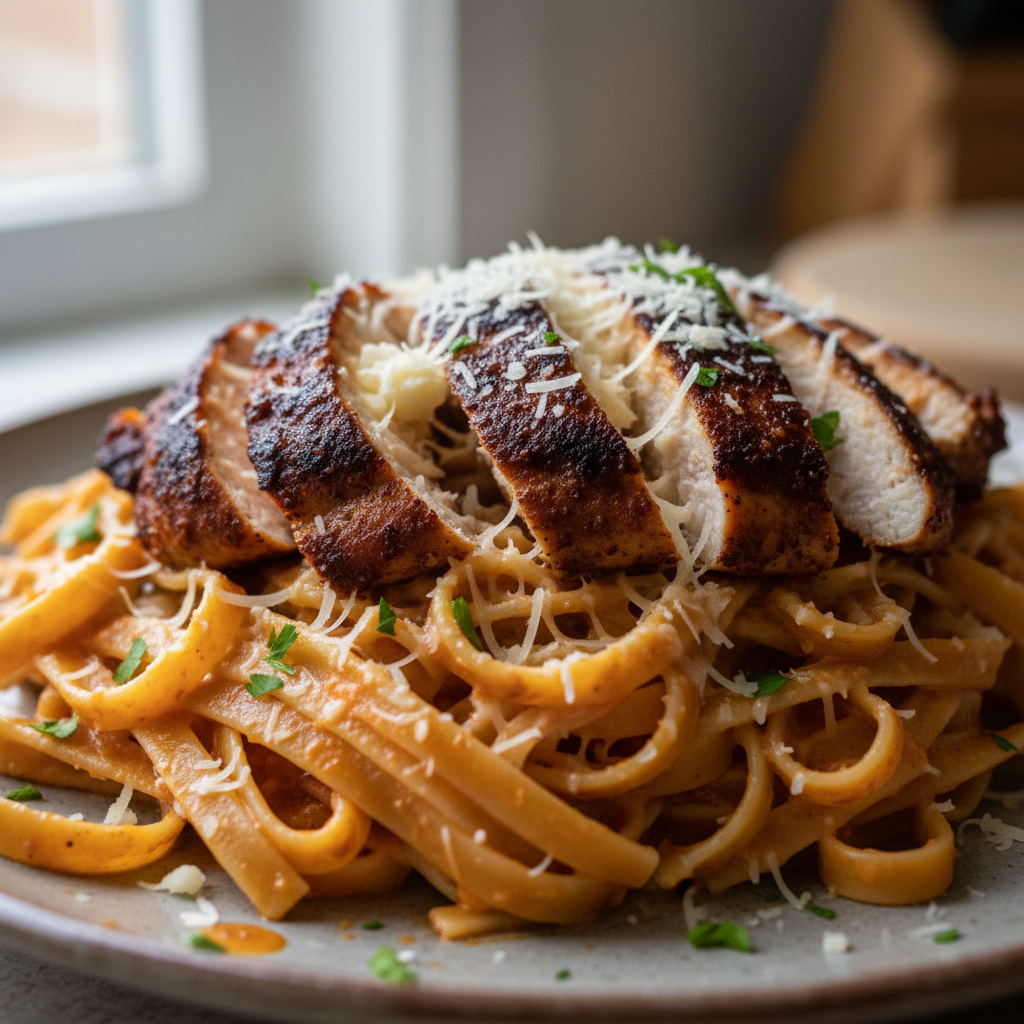
Creamy Blackened Chicken Pasta: A Flavorful Weeknight Meal
Ingredients
Equipment
Method
- Bring a large pot of water to a rolling boil. Add your fettuccine pasta, or your chosen shape, and cook according to package directions until it is perfectly al dente. Before draining, make sure to reserve 1 cup of the starchy pasta water. Then, drain the pasta and set it aside.
- On a clean, flat surface, pat the chicken breasts thoroughly dry with paper towels. To butterfly them, place a chicken breast flat on a cutting board. Hold it firmly with one hand and, using a sharp chef's knife, carefully slice horizontally through the thickest part of the breast. Stop just before cutting all the way through so it opens up like a book. This creates thinner, more even pieces for quick and uniform cooking.
- Generously season both sides of the butterflied chicken breasts with the blackened seasoning. Ensure full coverage for maximum smoky and spicy flavor.
- Heat a skillet, preferably cast iron for the best sear, over medium-high heat until it is very hot. Melt 1 tablespoon of butter in the pan. Carefully place the seasoned chicken breasts in the hot pan, making sure not to overcrowd it. Cook for 3 to 4 minutes per side until a deep, flavorful Maillard reaction crust forms. If you are using whole chicken breasts, the cooking time will be longer, approximately 7 to 8 minutes per side, until the internal temperature reaches 165F. Always use a meat thermometer to ensure proper doneness and safety.
- Remove the seared chicken from the pan and transfer it to a plate to rest. It is crucial to leave any browned bits, known as fond, on the bottom of the pan. These tidbits are packed with flavor and will be the foundation of your rich sauce.
- Add the remaining tablespoon of butter to the same pan. As it melts, use a spatula to scrape up all the flavorful fond from the bottom of the skillet, deglazing the pan. Add the chopped onion and sauté for 3 to 5 minutes until it becomes soft and wonderfully fragrant. Then, add the chopped garlic cloves and the drained fire-roasted diced tomatoes and sauté for another 2 minutes until they are aromatic.
- Pour in the chicken broth and stir in the tomato paste, combining it thoroughly into the mixture. Now, for our unique twist, add the ¼ cup heavy cream or cream cheese. Stir until the sauce is smooth and beautifully creamy. Incorporate ½ cup of the reserved pasta water and the parmesan cheese, stirring continuously until the cheese is melted and the sauce begins to thicken to a luxurious consistency.
- Add the cooked fettuccine pasta directly into the skillet with the creamy sauce. Toss everything together, ensuring every strand of pasta is thoroughly coated with the delicious sauce. If the sauce appears too thick, gradually add additional reserved pasta water, one tablespoon at a time, until you achieve your desired consistency.
- Slice the rested chicken breasts into strips or cubes, as you prefer. Gently fold them into the pasta, distributing the tender chicken evenly throughout the dish.
- For a fresh finish, sprinkle fresh parsley over the top if you are using it. Serve immediately with extra parmesan cheese on the side for anyone who desires more. Enjoy your flavorful creamy blackened chicken pasta!
Notes
Printable Recipe Card
Want just the essential recipe details without scrolling through the article? Get our printable recipe card with just the ingredients and instructions.