Skip to content
There is nothing quite like the aroma of a classic onion soup simmering on a cold afternoon. While many associate this dish with fancy French bistros, achieving that world-class, deep savory flavor at home is easier than you think. In my kitchen, I’ve perfected a few tricks, including a secret technique that makes store-bought stock taste like a 72-hour reduction.
In this guide, we will explore the science of the perfect broth and reveal a surprising umami twist that elevates this comforting classic to new heights.
Why You Will Love This Recipe
The Umami Butter Secret: By incorporating white miso paste into the butter during the final stages of caramelization, we create a complex protein bridge that mimics traditional veal stock, adding incredible depth.
Unrivaled Depth of Flavor: We move beyond simple onion sweetness to a multi-dimensional profile that is velvety, deeply savory, and incredibly satisfying, a true testament to the Maillard reaction.
Perfect Texture, Every Time: By using specific slicing techniques, your onions maintain their structural integrity throughout the long cooking process rather than turning into an unappealing mush.
Ingredients Needed
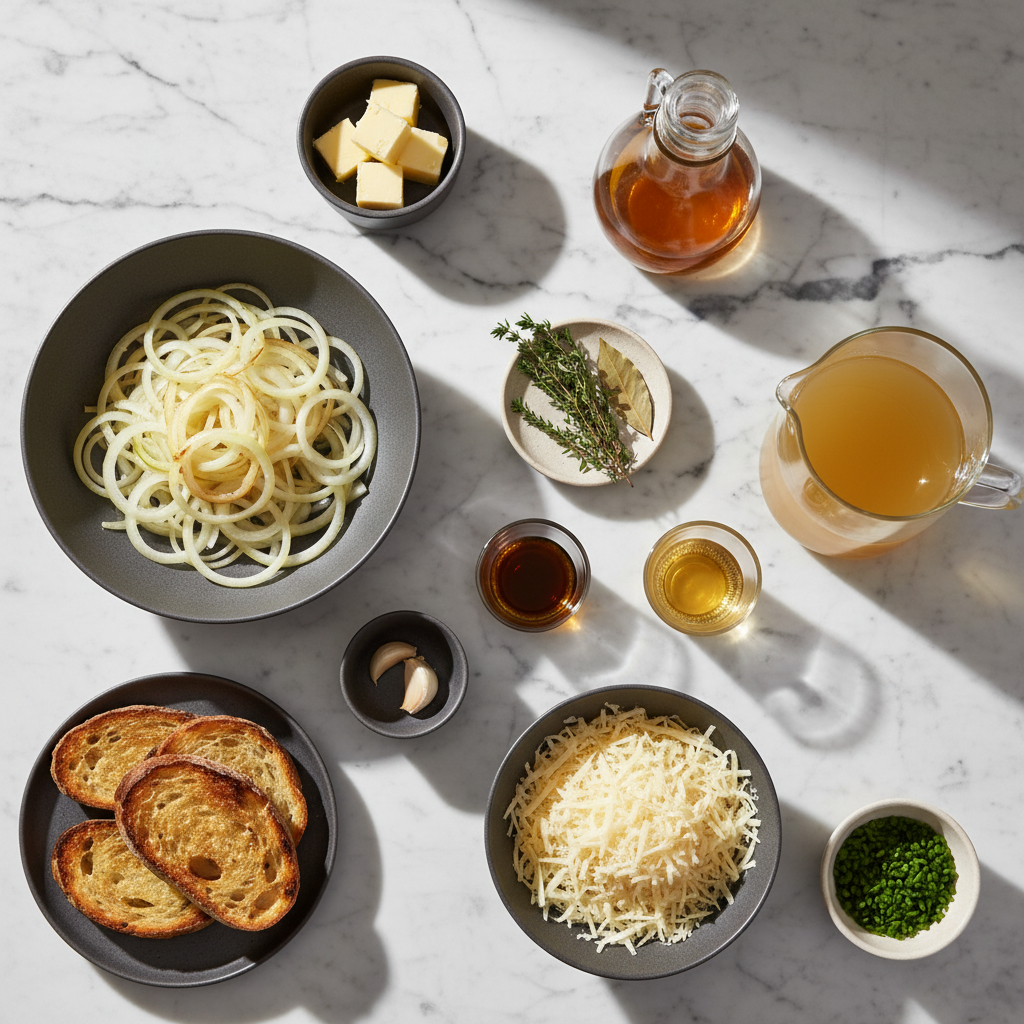
Making a truly exceptional onion soup starts with understanding each component. Here are the carefully selected ingredients that will build layers of flavor and texture for a comforting bowl that tastes just like home.
Ingredients
- 6 tablespoons unsalted butter
- 3 pounds yellow or mixed onions, sliced 1/8 inch thick
- Kosher salt
- freshly ground black pepper
- 1/2 cup dry sherry
- 2 quarts homemade beef stock or store-bought low-sodium chicken stock
- 2 sprigs thyme
- 1 bay leaf
- 1 teaspoon Fish sauce
- 1 teaspoon cider vinegar
- 8 bowl-size slices rustic bread, toasted until crisp
- 1 medium clove garlic
- 1 pound Gruyère cheese, grated
- 2 tablespoons freshly minced chives
Ingredient Notes and Substitutions
The Onion Mix: For the most complex and robust results, I always recommend using a blend of yellow onions for their inherent sweetness, red onions for a beautiful hue, and a few shallots to provide a sharp, aromatic kick. This layering of allium creates a truly dynamic flavor base.
The Bread Choice: While a classic baguette provides a wonderful crunch, a slice of good sourdough offers a lovely acidity that beautifully cuts through the richness of the cheese and broth. Whatever you choose, ensure the bread is toasted until it’s completely dry and crisp to prevent it from becoming soggy in the soup.
Broth Alternatives: When homemade beef stock isn’t an option, a high-quality chicken stock is often superior to a mediocre store-bought beef broth. Chicken stock carries the onion flavor more cleanly, allowing the sweetness and umami to truly shine without any off-notes.
How to Make the Perfect Onion Soup
This process demands patience, but the rich, golden results are well worth the wait. Let’s transform simple onions into a symphony of flavor.
Initial Softening and Patient Caramelization
- In a large stainless steel saucepan or a heavy cast iron skillet, begin by melting the unsalted butter over medium-high heat until it gently foams. Add all the sliced onions to the pan, stirring them occasionally until they have softened considerably, which usually takes about 8 minutes.
- Now, this is where the magic happens and patience is key. Reduce the heat to medium-low. Continue to cook the onions for 1 to 2 hours, stirring frequently. You’ll notice golden-brown bits, known as “fond,” forming on the bottom of the pan; these are packed with flavor. If these bits threaten to burn, simply add a tablespoon of water, scrape them up, and continue cooking. As the onions slowly transform, they will become incredibly sweet and develop a deep, rich golden-brown color. Season them lightly with kosher salt and freshly ground black pepper as they caramelize.
- About ten minutes before the onions are fully caramelized and achieve that deep mahogany color, stir in the white miso paste. This allows the miso to toast slightly in the butter, deepening the Maillard reaction and infusing the onions with an incredible umami boost.
Building the Broth
- Pour the dry sherry into the pan, immediately scraping the bottom with a wooden spoon to lift all the glorious browned bits and deglaze the pan. Let this simmer for about 3 minutes until the strong alcohol scent has dissipated, leaving behind a subtle sweetness.
- Add your chosen stock, fresh thyme sprigs, and the bay leaf. Bring the mixture to a gentle simmer over medium-high heat, then reduce the heat and let it continue to simmer for 20 minutes. This essential step allows all the incredible flavors to meld together beautifully.
- To finish the broth, stir in the fish sauce and cider vinegar. These additions brighten the flavor profile and add another layer of complexity. Taste and adjust the seasoning with salt and pepper as needed. Before serving, remember to discard the thyme sprigs and bay leaf.
The Gratinée and Final Presentation
- Preheat your broiler and position an oven rack to the top. Take your toasted rustic bread slices and rub them generously with a raw garlic clove until they are fragrant.
- Carefully spoon a small amount of the hot broth into the bottoms of ovenproof serving bowls. Place half of your garlic-rubbed toast slices on top of the broth, then sprinkle a layer of grated Gruyère cheese. Spoon more soup and onions over the cheese, almost filling the bowls.
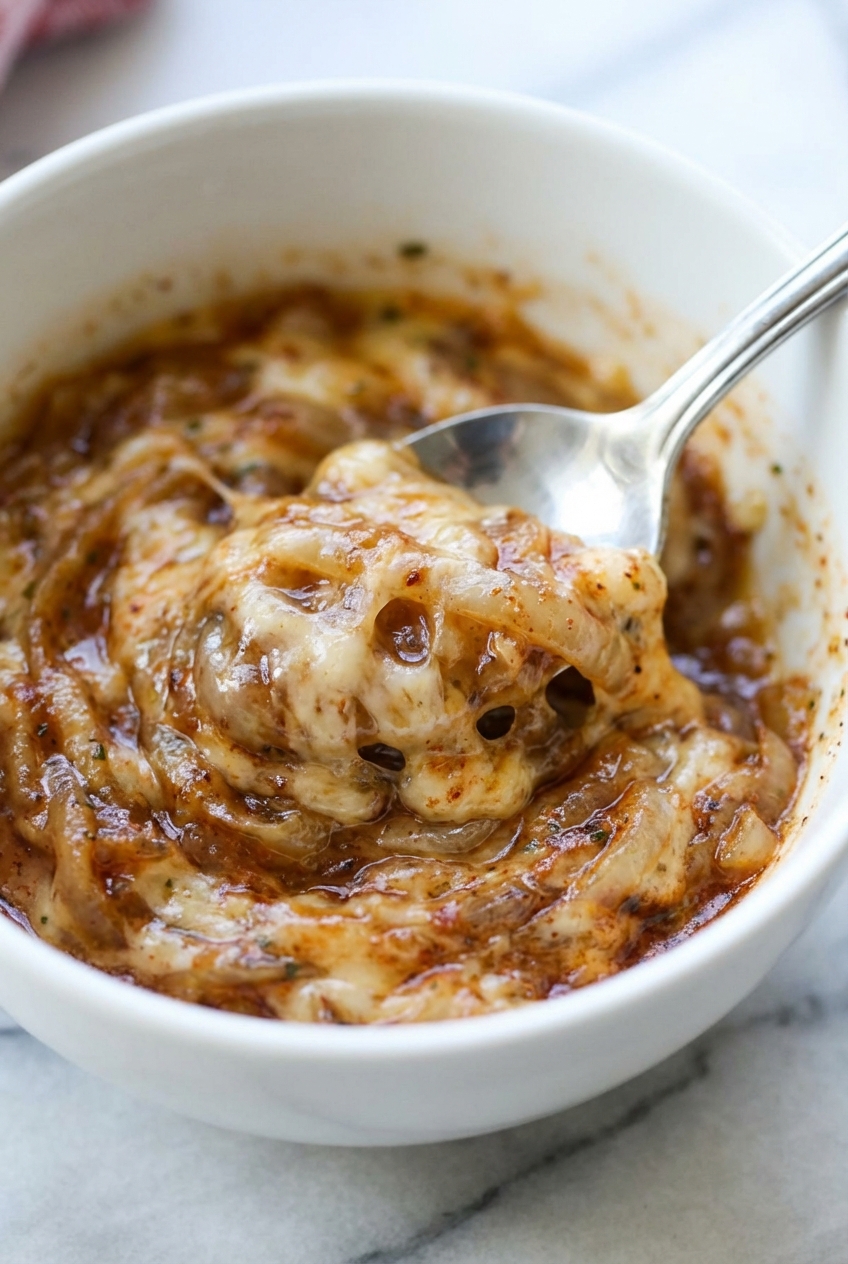
- Finally, add the remaining toast slices, gently pushing them down to nearly submerge. Top generously with the remaining grated Gruyère cheese, ensuring a thick, even layer. Place the bowls on a rimmed baking sheet for safety and broil them until the cheese is beautifully melted, bubbly, and deeply browned in spots.
- Garnish your masterpiece with freshly minced chives and serve immediately, allowing each guest to enjoy the dramatic pull of the golden cheese.
Secrets for Kitchen Success
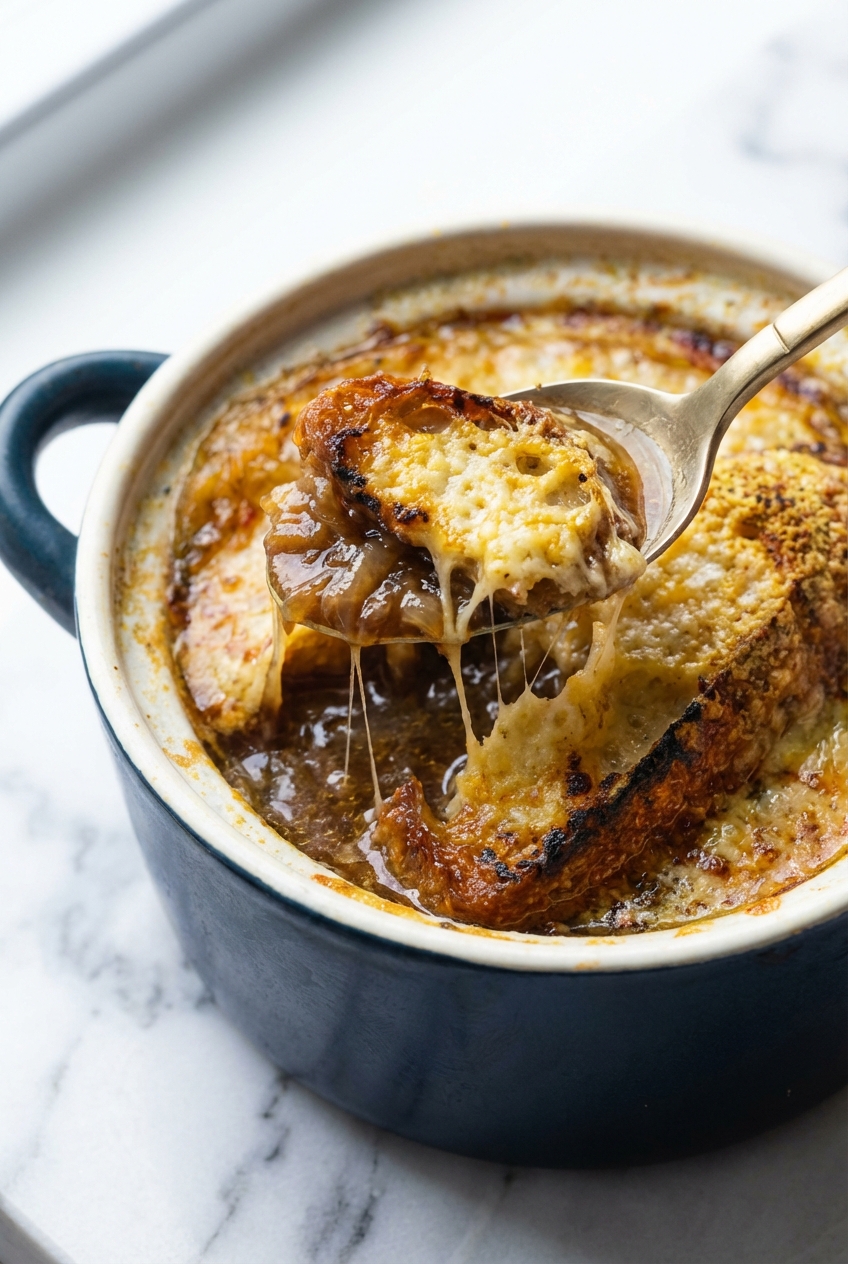
Always slice your onions “pole-to-pole,” from the root to the stem, rather than into rings. This technique follows the natural fiber of the onion, ensuring they maintain their structural integrity and don’t disintegrate into mush during the long, patient simmer.
When it comes to the crucial gratinée step, never place cold ceramic bowls directly under a hot broiler. Warm your bowls with hot water beforehand or ensure they are at room temperature to prevent thermal shock, which can cause them to crack. Safety first in the kitchen!
Don’t be intimidated by the dark, caramelized bits forming on the bottom of your pan, also known as “fond.” These are pure flavor! Regularly deglazing with small splashes of water during the 1-2 hour caramelization process helps lift these precious bits, building a richer, darker color and deeper flavor without any of the bitterness associated with burnt sugar.
Pro Tips and Troubleshooting
Pro Tips
- Garlic Magic: Rubbing the toasted bread with a raw garlic clove provides a sharp, aromatic hit. This fresh, pungent flavor wonderfully balances the heavy, melted Gruyère cheese, much like the rich blend you find in a decadent cheesy garlic chicken dish.
- The Miso Bridge: White miso paste provides a fermented, salty depth that mimics the complex protein notes usually reserved for expensive, long-simmered bone-in stocks. It’s an easy way to achieve gourmet flavor.
Common Mistakes to Avoid
- Rushing the Process: If you try to caramelize onions in 20 minutes, they will inevitably be bitter and lack true sweetness. Authentic caramelization requires at least 45 to 60 minutes for the sugars to properly develop.
- Using Baking Soda: While baking soda can speed up browning, it drastically breaks down the cellular structure of the onions, often resulting in an unappealing, mushy texture. Avoid this shortcut for the best results.
Serving and Storage
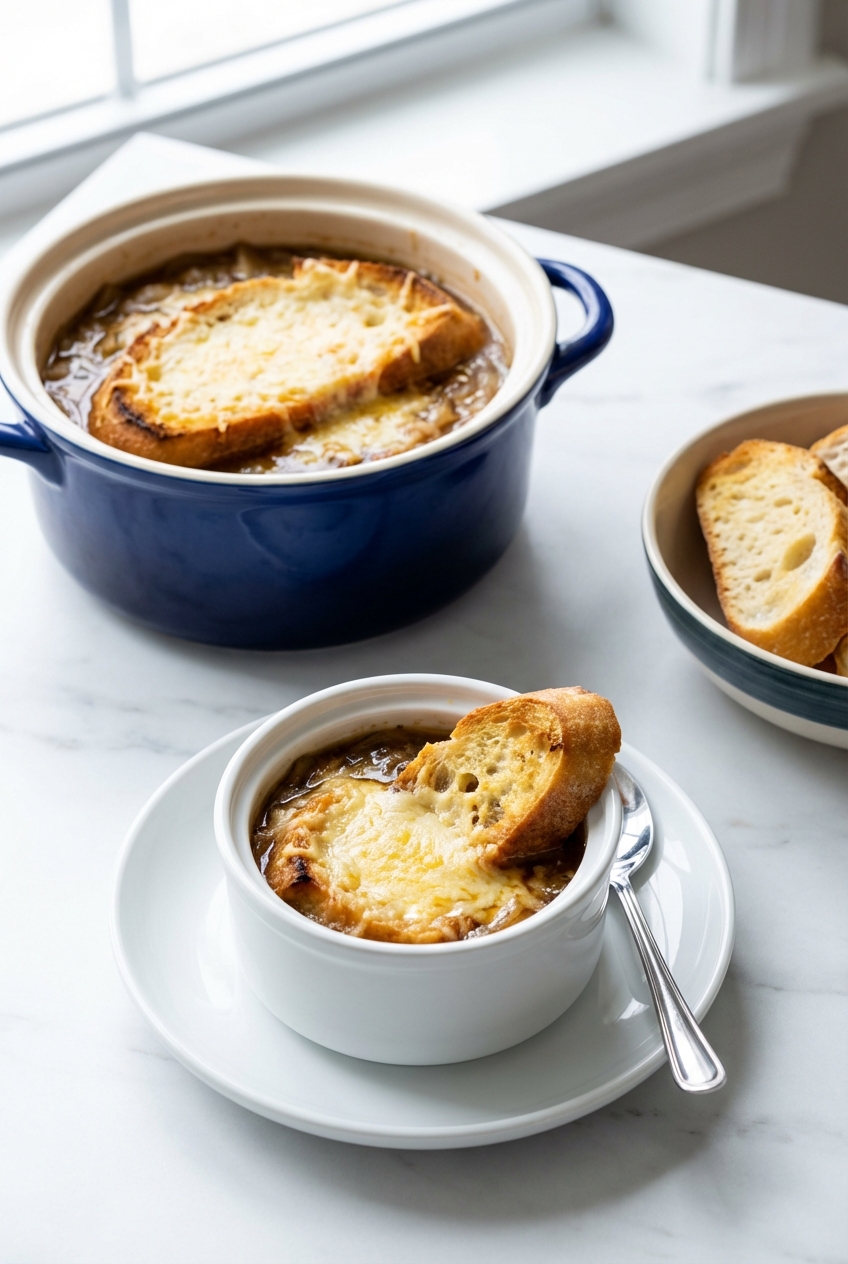
Serving Ideas
This rich, comforting soup pairs beautifully with a crisp green salad, dressed with a sharp vinaigrette. The acidity of the salad provides a refreshing counterpoint to the deeply savory broth and gooey cheese.
For a heartier meal, consider serving the onion soup as a starter before a satisfying main course like a flavorful garlic butter steak, or alongside some vibrant crispy green beans for a balanced meal.
Always serve this soup in traditional deep ceramic crocks. These bowls not only look authentic but also help maintain the soup’s heat and provide sturdy support for the thick, bubbly cheese cap.
Storage and Make-Ahead Tips
The base of your onion soup, without the bread and cheese, can be a fantastic make-ahead dish. Prepare it up to 3 days in advance and store it securely in the refrigerator; the flavors often deepen and improve overnight.
For longer storage, the broth freezes exceptionally well for up to 3 months. When you’re ready to enjoy it, simply thaw, reheat, and then add fresh, toasted bread and Gruyère cheese just before broiling and serving.
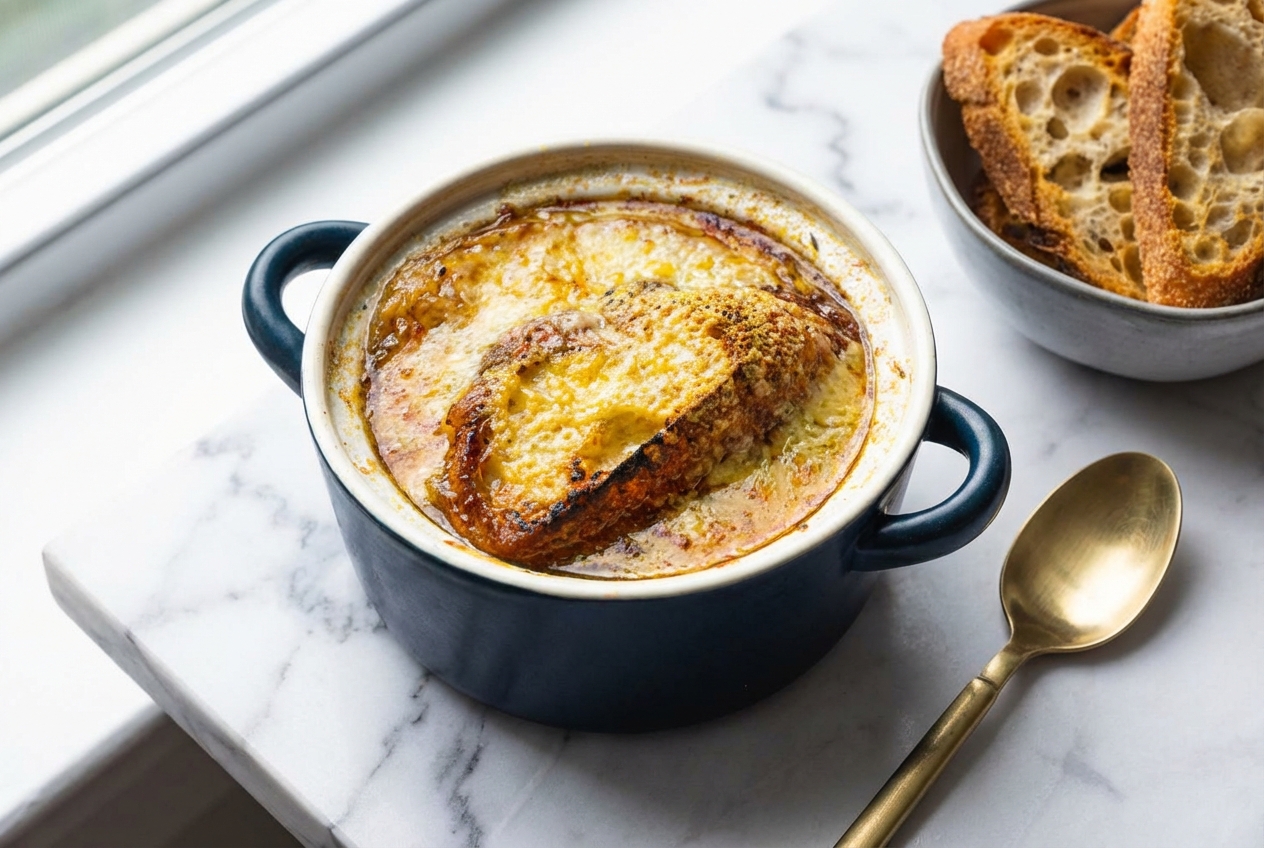

Classic Onion Soup With Umami Twist
Ingredients
Equipment
Method
- In a large stainless steel saucepan or heavy cast iron skillet, melt the unsalted butter over medium-high heat until it foams. Add all sliced onions and stir occasionally until softened, about 8 minutes.
- Reduce the heat to medium-low and cook the onions for 1 to 2 hours, stirring frequently. If the browned bits (fond) on the bottom threaten to burn, add a tablespoon of water and scrape them up. Season lightly with kosher salt and pepper as they reach a deep mahogany color.
- Approximately ten minutes before the onions are fully caramelized, stir in the white miso paste. Allow it to toast slightly in the butter to enhance the Maillard reaction and boost umami flavor.
- Pour the dry sherry into the pan and deglaze by scraping the bottom with a wooden spoon. Simmer for about 3 minutes until the alcohol scent dissipates.
- Add the beef or chicken stock, thyme sprigs, and the bay leaf. Bring to a gentle simmer over medium-high heat, then reduce heat and continue simmering for 20 minutes to meld the flavors.
- Stir in the fish sauce and cider vinegar to brighten the profile. Adjust seasonings with salt and pepper as needed, then discard the thyme sprigs and bay leaf.
- Preheat your broiler with the oven rack in the top position. Rub the toasted rustic bread slices generously with the raw garlic clove until fragrant.
- Spoon a small amount of hot broth into the bottom of ovenproof bowls. Place half of the toasted bread slices on top, sprinkle with Gruyère, then fill the bowls with more soup and onions.
- Add the remaining toast slices, pushing them down slightly. Top generously with the remaining grated Gruyère cheese. Place the bowls on a rimmed baking sheet and broil until the cheese is melted, bubbly, and browned in spots.
- Garnish with freshly minced chives and serve immediately while the cheese is hot and gooey.
Notes
Frequently Asked Questions
Which onions are best for French onion soup?
While yellow onions are the classic choice due to their high sugar content, my preference is for a mix. Combining yellow onions with red onions for color and a few shallots for a sharper aromatic kick creates a far more complex and interesting flavor profile.
How long does it really take to caramelize onions?
To achieve that true deep, mahogany color and incredibly sweet flavor, expect to dedicate a good 60 to 90 minutes to the caramelization process. Any recipe that promises “caramelized onions” in 15 minutes is likely just browning them, which won’t yield the same depth of flavor.
What can I use instead of beef broth for a vegetarian version?
For a delicious vegetarian option, use a high-quality vegetable stock as your base. To replicate the missing umami depth that beef broth provides, I recommend enhancing it with a tablespoon of tamari and a splash of balsamic vinegar.
How do I prevent the cheese from sinking into the soup?
The secret to a perfect, floating cheese cap is making sure your bread slices are toasted until they are as hard and firm as croutons. Additionally, choose bread slices that fit the diameter of your bowl closely, creating a stable physical shelf for the cheese to melt upon.
Why should I rub the bread with garlic?
Rubbing the toasted bread with a raw garlic clove introduces a fresh, pungent garlic aroma. This uncooked garlic note provides a vibrant contrast that beautifully cuts through the richness of the butter, caramelized onions, and gooey Gruyère, making each bite more dynamic and exciting.
Printable Recipe Card
Want just the essential recipe details without scrolling through the article? Get our printable recipe card with just the ingredients and instructions.